Tuesday, June 15, 2021

Book Club: Book Review of Help Your Kids Learn & Love the Bible

 A Mom's Quest to Teach: Book Club: Book Review of Help Your Kids Learn & Love the Bible

I received a COMPLIMENTARY copy of this book from the publisher in exchange for my honest opinion. I was not required to write a positive review, nor was I compensated in any other way. This post contains affiliate links. For more information, please see my Terms of Use and Disclosure Policy page. Thank you.

A brand new wonderful resource available to help parents on the journey to teaching their children about the Bible has been published by Bethany House Publishers. Help Your Kids Learn & Love the Bible by Danika Cooley gives parents "the tools and confidence to study the Bible as a family." In three parts and only 199 pages, Cooley provides advice, experience, and personal stories that will help parents "initiate and strengthen your child's relationship with the Lord through His Word." 

About Help Your Kids Learn & Love the Bible 

Sandwiched between an introduction where readers are introduced to the idea that they are Generation Bible and a conclusion that reminds us of several real-world stories that "the whole Christian history is full of faithful parents" (184) are three parts that give you the practical advice and concrete ways in which you can help your children learn and love the Bible. 

The message at the heart of Help Your Kids Learn & Love the Bible is that as a family you can read the Bible from cover to cover, no matter if you have preschoolers or high schoolers. Reading the Bible as a family can become a natural part of our day using the plan and advice of Cooley.

A Mom's Quest to Teach: Book Club: Book Review of Help Your Kids Learn & Love the Bible cover of the book


Part One: You're the Leader 

Cooley helps put to bed the myth that the Bible is too difficult to read as a family. Our children can appreciate the Bible as we find a translation that works for our family, look at which parts we can skip for our younger children (for now), and find ways to go to God and His Word every day. And yes, there will be times when we need to adjust our plans, but that is okay. 

Part Two: Faithful Reading 

To help parents understand the Bible, Cooley looks at the authors of the Bible, all the "i" words - inspired, inerrant, and infallible, how the Bible is organized, and the primary themes of the Bible. I truly appreciated Cooley's reminder to look for the main themes and read the Scripture in context. 

Part Three: A Daily Walk 

In this final section, Danika Cooley shares how to actually help your kids learn and love the Bible. From round-robin Bible reading to concrete hands-on activities, there are so many wonderful ways shared to help parents. Songs, puppet shows, memorizing scripture, praying the Bible, and other ideas will help you make your Bible reading time come to life. 


book cover of Help Your Kids Learn & Love the Bible


My Thoughts 

I loved Help Your Kids Learn & Love the Bible. The practical advice and suggestions for teaching your children, like creating a 'bookcase' of the genres of the Bible, to the personal stories the author shared were wonderful. One of the things I liked the most about Cooley's book is the fact that she speaks of her homeschooling experience. As a homeschooling family ourselves, it was nice to read about how one mom incorporated the Bible into her family's homeschooling day.

While reading Help Your Kids Learn & Love the Bible, I had my pen ready because there were so many parts that I wanted to notate and revisit. Even though we use several different homeschooling curriculum pieces that allow us to bring the Bible into our daily lessons, I found many new ideas from Cooley's book. I want our family to work on Scripture memorization more and create more crafts with our younger children. I also want to go through the list of works consulted to find more information to help our family grow in the Word of God. 

I recommend Help Your Kids Learn & Love the Bible to parents whether their children are homeschooled or attend public or private school. There is so much useful information and advice to help us set up a routine of Bible reading. Churches would also find the book helpful so they can minister to their families and help them bring their children to the Bible. I feel this book will help our children fill their hearts full of Scripture. 


Saturday, June 12, 2021

Blogging Through the Alphabet: J is for Johnston

A Mom's Quest to Teach logo: photo of cannon;  Blogging Through the Alphabet: J is for Johnston

Albert Sidney Johnston was no stranger to military life before the first shot was fired upon Fort Sumter. He had fought for both Texas and the United States against Mexico, and he spent time in the West before his home state of Kentucky seceded from the Union. He has been described as tall, posing a sense of humor and quiet authority. Jefferson Davis is quoted in a book by Shelby Foote as saying that Johnston was "the greatest soldier, the ablest man, civil or military, Confederate or Federal." 

Johnston was one of several generals of the Confederacy serving in the Western Theater of the American Civil War. Forts were relied upon in the West to protect the Confederacy against both land and river-borne invasions by the Union. These forts would be hotly contested. In this post, I will discuss Johnston and two forts – Fort Henry and Fort Donelson. 

pencil drawing of Fort Donelson from ushistoryimages.com
Fort Donelson


Fort Henry 

As one of the weakest points in Johnston's long defensive line in the West, Fort Henry was attacked on February 6, 1862, by Brigadier General Ulysses S. Grant and Flag Officer Andrew H. Foote. While the Confederates put up a fight against the Union gunboats in the river, they eventually surrendered. After this capture, Grant said he would capture Fort Donelson on February 8th. With the coming bad weather, an attack on Fort Donelson had to be postponed, but Grant's men were still in a position that separated Johnston's men. 

What to Do Next? 

Johnston really had two options available to him. He could concentrate all his men (about 35,000) at Fort Donelson and maybe counterattack to get Fort Henry back into Confederate hands, or he could give up Kentucky and focus on the defense of the factories and depots in Nashville. So, would Johnston try to defend Fort Donelson on the Cumberland River and perhaps get Fort Henry back (situated on the Tennessee River), or would he retreat to save the men for another day? 

Albert Sidney Johnston preferred to retreat to the Nashville-Memphis line and leave only a small fighting force at Fort Donelson. This would save the Confederates under this command to fight another day. This was a very good plan, but he abandoned it. He decided to make a real fight at Fort Donelson, but he only kept 12,000 of the Confederate soldiers at the Fort. The rest retreated to Nashville. And John Floyd was appointed to defend Fort Donelson (just so you know, General John Floyd was sent to the west after he had problems in Western Virginia). 


stockade and tents in civil war pencil drawing from wpclipart.com
graphic from wpclipart.com


Fort Donelson 

What picture comes to mind when you hear the word "fort?" Personally, I think about a well-defended military position with solid walls surrounding barracks, common areas, storage areas, and more. Fort Donelson was actually just a stockade of around 15 acres of soldiers' huts and equipment sheds. There were two batteries of 12 heavy guns dug into the side of a 100-foot bluff on the Cumberland River to stop attacks by water. Add in three miles of trenches to repeal land attacks, and the fort was pretty well defended, if not a stereotypical fort. 

Attacks on Fort Donelson 

On February 13, 1862, the Union sent several probing attacks. By February 14, there were about 25,000 Union soldiers, ten ironclads, and two wooden gunboats in positions to attack Fort Donelson. The Ironclads fired upon Fort Donelson but moved in too close and ended up overshooting their targets. This miscalculation allowed the Confederates to heavily damage the ironclads. The shots from the Confederate heavy guns would smash through the decks of some of the ships. There were 54 sailors dead or wounded, including an injury to Foote, and no Confederates lost in this part of the battle. 

pencil drawing of ironclad ships attacking Fort Donelson


Early Celebration and Potential Defeat 

The Confederates celebrated the withdrawal of the ironclads, but there was really no cause for celebration. The Union soldiers still surrounded the Confederates. During the night of February 14, after the Confederate generals discussed what to do, they moved Confederate troops to the left side. At dawn the next day, the Confederates attacked. 

The Confederates were breaking out on the morning of February 15, and Grant was caught unaware. He ordered his men to sit tight, and the Union Generals met the force of the Confederates and ended up retreating. One would think the Confederates would keep pushing ahead, right? No, a Tennessee politician, Gideon Pillow, persuaded General Floyd to move the Confederates back to the trenches, effectively losing any territory they had gained from the Union. So, of course, the Union regrouped and regained the ground they had lost during the morning. 

Night into Day 

During the evening of February 15, there were almost 1,000 Union and Confederate soldiers dead, with about 3,000 wounded. The cold continued to creep in while the Confederate leaders discussed what action to take. It was decided to surrender the Fort, but General Floyd and Gideon Pillow would leave and force now-General Simon Bolivar Buckner to handle the actual surrender of Fort Donelson. On February 16, 1862, Buckner surrendered Fort Donelson with approximately 12,000 to 13,000 men to General Grant. 


modified photograph of General Sidney Albert Johnston; A Mom's Quest to Teach:  Blogging Through the Alphabet: J is for Johnston


Results 

This surrender would propel Grant towards becoming a household name. Lincoln promoted him to Major General after this Union victory. And the consequences for Johnston's forces in the Western Theater would be devastating. About 1/3 of his force were out of action, and the rest were split, with about 200 miles separating them. He then had to evacuate Nashville on February 23, 1862, which meant that the Confederates lost control of their first state capital and a huge industrial center. 

Johnston was heavily criticized after the losses of Fort Henry and Fort Donelson. He was charged with drunkenness and incompetence, but Jefferson Davis stood by him while Johnston ignored the critics. Albert Sidney Johnston wouldn't have time to prove himself an effectual general, as he was wounded at the Battle of Shiloh on April 6, 1862 and died on the battlefield.

Images from wpclipart.com and ushistoryimages.com 

If you want to join Blogging Through the Alphabet, please visit: 

Wednesday, June 9, 2021

Wordless Wednesday: Project Time

A Mom's Quest to Teach logo: Wordless Wednesday: Project Time - Fallout Collectables
 

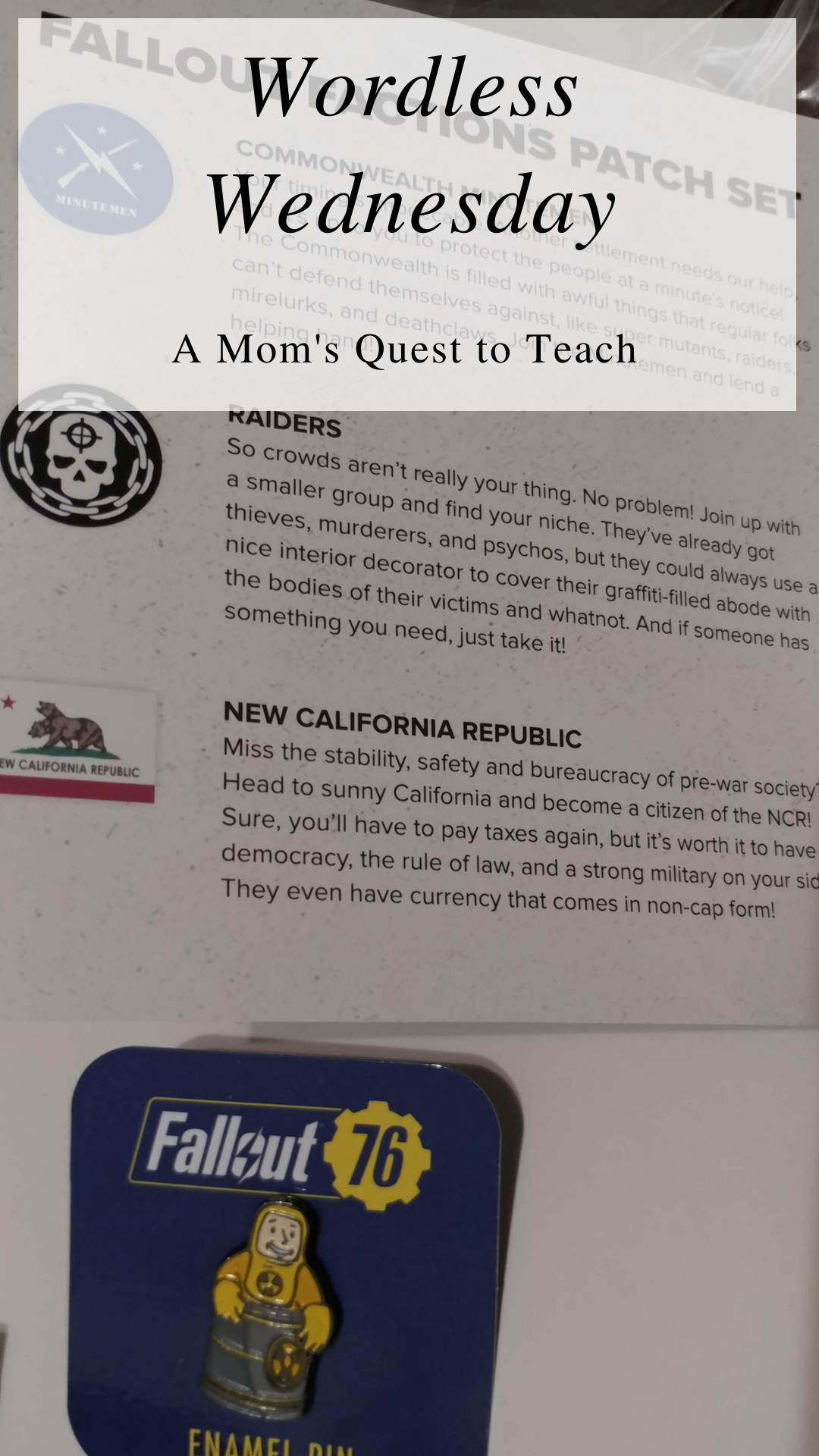
So mostly wordless...I finally worked on a project to replace framed art in our kitchen. I wanted to put some of my Fallout collectables on display rather than have them sitting in boxes. 


A Mom's Quest to Teach logo, Fallout Collectables

A Mom's Quest to Teach logo, Fallout Collectables - pins

A Mom's Quest to Teach: Wordless Wednesday: Project Time - Fallout Collectables

Saturday, June 5, 2021

Blogging Through the Alphabet: I is for Inflation and Financing the Civil War

A Mom's Quest to Teach logo: Blogging Through the Alphabet: I is for Inflation and Financing the Civil War background photo of cannon

War is often at the mercy of money. The splitting of the United States during the American Civil War led to the two sides facing a variety of problems. The Confederacy's capital was tied up in land, slaves, and planters in debt. And while the Northern economy had fewer problems, they pretty much came to a halt in 1861 as there was a panic that caused a run on banks. 


The South 

There was no tradition of paying taxes in the South as there were not a lot of pre-Civil War taxes. Even though taxation would be the least inflationary method, it was also the least appealing way to Southerners to raise money to pay for the War. Although a direct tax on property became law, few Southern states actually paid the money to the Confederate government.

One of the ways how the Confederacy financed the Civil War was by printing notes. There were large quantities of paper dollars in circulation. As soon as the paper dollars were printed, their value dropped. There were also counterfeit notes printed in abundance in the South. The funny thing is some could be identified as counterfeit because of the superior printing quality.

The victories in the South led to confidence in the economy, but the continual printing of new notes led to problems. By 1863, it would take $7.00 to buy what it only took $1.00 to buy two years earlier. Who was most impacted by inflation? The poor were those who were most impacted by this inflation, and the divisions between classes widened in the South. 

A Mom's Quest to Teach logo: Blogging Through the Alphabet: I is for Inflation and Financing the Civil War background photo of cannon, graphic of money and pie chart


North 

Two of the economic advantages the North had during the American Civil War were an established Treasury and revenue from tariffs, but there were problems. When Abraham Lincoln became president in 1861, the United States had the highest national debt in forty years. His Secretary of the Treasury, Salmon P. Chase, set forth to make changes that would help the North finance the war. 

The idea of war bonds is something that is commonly associated with World War II. But during the American Civil War, they would also be sold, and (different from other war bonds sold in America's past), they would be sold to ordinary people, not just corporations. There were several different types of war bonds issued during the Civil War. (Read more here: Museum of American Finance.)

Another thing that is very common today was collected during the Civil War for the first time in American history. On August 5, 1861, the first federal income tax was collected, but most wage earners were exempt from it. Only those earning more than $800 would pay the 3% tax. Lincoln's tax law was repealed by Congress in 1871, but the system in use today would come with the 16th Amendment. 

Many of the other ways in which the North would raise funds for the war effort are still in place today or, at least, in similar ways. For example, the Internal Revenue Act of 1862 was passed to help raise more funds for the American Civil War. The Act placed taxes on various luxury items and taxes on other things in the North, such as:

  • Playing cards
  • Carriages
  • Jewelry
  • Billiard tables
  • Stamp Taxes
  • Inheritance Taxes
  • Income Tax
  • License tax on professions 

Concluding Thoughts 


During the American Civil War, the South faced blockades, invasions, and a flood of paper money. They were an agrarian economy not equipped for war, while the North did have several advantages economically. There were huge discrepancies economically and how the two sides financed the war. While the Union had about 80% inflation, the Confederates had 5000 to 9000% inflation. So when comparing the two, those living in the South were impacted more by inflation than those citizens living in the North.