Showing posts with label Henry VIII. Show all posts

Thursday, June 28, 2018

H is for Henry VIII (Blogging through the Alphabet)

Henry VIII and Tudor Rose


In this post, I will share about another one of my favorite people to study in history – King Henry VIII. As his life is long and complicated, I will write only about his early years and the events in which Catherine of Aragon, his first wife, was alive and played an active part. 

King Henry VIII of England reigned for 38 years. He broke away from the Roman Catholic Church and married six women to produce a male heir. He is known for his extravagant lifestyle, his warring nature, and is seen as destroying the Catholic Church in England to divorce his wife.  Many of these conceptions are not entirely true. There were many reasons for his break from the Roman Catholic Church and his determination to win France back. Henry was also known for bringing England back into Europe with his conquests to regain the portions of France that had once been under English control. 

Henry VIIIKing Henry VIII received advice from his father, Henry VII, on his deathbed. He advised him to do three things and left him with councilors to aid him in his ruling of the country. He wished his son to marry Catherine of Aragon, to defend the Church against the infidels and urged him to execute Edmund de la Pole, Earl of Suffolk, who was a traitor. Henry VIII fulfilled his father's wishes in all three accounts. He did marry Catherine, defend the Church, and – in the spring of 1513 – he executed de la Pole.


After his older brother, Prince Arthur, died, Henry's life became severely restricted. His father was with him almost all the time. He was never given any real responsibility or independence for fear that he would also die and leave the kingdom in the hands of either his sister Margaret and her husband (the King of Scotland) or his other sister, Mary (still unwed). As a youth, his education included theology, mathematics, music, and languages such as Latin, French, Italian, and probably Spanish.  

On June 23, 1509, the procession that led to his coronation took place. Henry's coronation was quite extravagant with revels, pageants – which the newly crowned king took part in, tilts, jousts, dancing, and music concerts. Henry soon became known as a Renaissance Prince for he was regarded as an athlete and an intellectual – as well as a sportsman and a musician. He also took part in courtly love. Henry was described as being extremely handsome, 6 feet tall, strong, and having a desire to dress up in jewels, silks, and feathers.

Unlike his father, Henry VIII considered the duty of the King not to make treaties but to win victories. The nobility of England lived in a world where war could bring adventure and honor along with quick money. Henry saw himself as the military leader that would bring his people glory in war.

Before Henry could lead his country into war, he would need to secure succession to the Tudor throne. Catherine of Aragon was left widowed upon Prince Arthur's death. A papal dispensation was needed for Henry and Catherine's marriage to take place. If the marriage between Catherine and Arthur had been consummated then they would need a dispensation on the grounds of "impediment of affinity in the first-degree collateral." If the marriage had not been consummated, as Catherine insisted, they would need a dispensation from the impediment of public honesty, which they did not seek. These details would cause problems when Henry would seek divorce from Catherine in 1527.


Henry Marries Catherine 


King Henry VIII and Catherine of Aragon were married on June 11, 1509. Whether it was his wish to obey his father, the dispensation from the Pope, the gold of the dower, or the desire to form strong royal bloodlines that encouraged him, it was evident that in the early years Henry did love his Queen. At 23, Catherine was devout, pretty, and his "lady-love." He wrote songs for her and publicly expressed his devotion. She became pregnant shortly after their marriage, only to give birth to a stillborn daughter in May 1510. During the early years of Henry and Catherine's marriage, there were continuous festivities, with masks, comedies, and revels in which Henry played parts. It was during these festivities that King Henry most probably became acquainted with ladies of the court.

Shortly after becoming king and marrying Catherine, Henry first received a taste of war and deception when he agreed to send aid to Ferdinand of Aragon, his father-in-law, to drive the Moors from North Africa. Unfortunately, when the English troops arrived there they soon discovered that Ferdinand had abandoned the plan and the English ended up in Spain getting drunk and killing several Christians.
Six wives of Henry VIII

Catherine gave birth to Henry, Prince of Wales, on January 1, 1511, to great celebrations. King Henry traveled on a pilgrimage to thank "Our Lady" and began to plan an enlargement of the court for his son and future heir. In approximately seven weeks, however, the heir had died and was buried with a lavish funeral. In October 1513, Catherine suffered a miscarriage. In December 1514, she gave birth to a boy who didn't survive. In February 1516, she gave birth to Mary, who was named after her aunt. Her last pregnancy ended with a stillborn daughter in November 1518.  Even though Catherine's pregnancy years were over there were still hopes that Henry would have a male heir. In 1519, a son (Henry Fitzroy) was born to one of Henry's mistresses, Bessie Blount. Beginning in 1526, he began receiving titles such as Duke of Richmond and Somerset. Henry Fitzroy would also gain the rank of Lord High Admiral of England. For a while it appeared that he would become the king's heir but in July of 1536 at 17 years old he died.

While Henry was in France battling on behalf of the Holy League, his wife, Catherine, was made "Governor of the Realm and Captain-General of the Forces" with a council to aid her in decision making. On September 9, 1513, James IV, King of Scotland, led his people against the English under the Earl of Surrey at the Battle of Flodden. In three hours, almost all of the Scottish aristocracy had been killed – including the King. Henry had missed both the Battle of the Spurs, the only open engagement in France, and the Battle of Flodden, a decisive battle between Scotland and England. He was not really living up to his idea of winning victories.

Henry said after Mary's birth, "By the grace of God, the sons will follow." During his lifetime, the Christian viewpoint of childbirth was not biological. Most believed that God either passed the parents' sins onto the child or that parents were punished by not being allowed to have any children.  So, it was very likely that Henry believed divine favor was necessary for a successful childbirth.  Henry had begun to question why no living male heir had been born and – in the Old Testament – he found his answer. Using Leviticus 20:21 out of context, he saw his marriage as a sin. The lack of male children was his punishment for sinning. Henry felt the pope had no right to go against biblical law (specifically the Levitical commandment that a man must not marry his brother's wife). Whether Leviticus referred to seducing a living brother's wife or Henry's position, Henry was determined it applied to his lack of male heirs by his marriage to Catherine.

On May 5, 1527, Henry met Anne Boleyn, Catherine's newest attendant. At the same time secret proceedings were opened to judge the validity of the king's marriage to Catherine. In June, Henry decided he must tell Catherine about the proceedings and that their marriage was never lawful but it was too late, she had already found out.


'Great Matter'


During the summer of 1527, the imperial forces of German Holy Roman Emperor Charles V (Catherine's nephew) had sacked Rome and Pope Clement VII was at his mercy. It was during this opportune time that Catherine appealed to her nephew, who supported her. When Henry approached Clement VII for an annulment, all the pope could do was agree to a dispensation permitting his remarriage. Clement VII suggested the English courts pass sentence and then after Henry remarried the validity of that union could be proven by Rome. This was not a viable solution for Henry because the legitimacy of the children by this second marriage could be questioned. Clement even tried to persuade Catherine to enter a nunnery, to no avail.

Since none of the pope's suggestions were to Henry's likening, Cardinal Lorenzo Campeggio was sent to London to investigate the King's 'great matter' and – if possible – bring the King and Queen back together but he was to make no decision without Rome's consent. In May 1529, the Legatine Court opened. Conflicting biblical teachings were to be argued to either prove or disprove Henry's case.

Catherine only wanted the Pope to pass judgment on the case, because she felt she would not receive a fair hearing in England. She made one dramatic appeal to the King, saying at his feet, "'When ye had me at the first I take to God to be my judge, I was a true maid without the touch of man….'" During this, Henry remained silent and Catherine refused to return to the court. At the end of July 1529, Campeggio halted the proceedings according to the Roman calendar and the court would not meet again.

In 1530, Henry began to think about a way around what could be considered a papal obstacle. How about just denying the Pope's authority and replacing him as head of the Church in England? The same king who had been given the title Defender of the Faith from the Pope for his efforts against Martin Luther, now proposed to set himself as the head of the English Church. In 1531, Henry was recognized as the Supreme Head of the Church of England by the Reformation Parliament.

In the summer of 1531, Catherine was sent away from court. At 48 years old, on April 9, 1533, she was told she was no longer the Queen but only the Princess Dowager, the widow of Prince Arthur.  On January 7, 1536, Catherine, whose motto as Queen had been 'humble and loyal,' passed away with her death celebrated by her former husband and King.

Even after years of studying the life and times of Henry VIII, I am still amazed at how much of his own biography – his own life history – is tied up with that of his wives and family members. We are never truly separate from those in our family.
If you enjoyed this post, please check out these others! 


images, unless of Henry VIII from: Openclipart and WPClipart

If you make a purchase through one of these links, I may receive a small commission at no costs to you.


I linked up with the following blog(s):


Thursday, June 7, 2018

E is for Elizabeth I (Blogging through the Alphabet)

image of Elizabeth I and title of A Mom's Quest to Teach Blog Post with Rose

This post contains affiliate links. For more information please see my Terms of Use and Disclosure Policy page. Thank you.

One of my favorite areas of history is British History – specifically that of the Tudor time period. I have read so many books about the Tudors, have watched numerous documentaries and movies about their lives and the time period, and even had the opportunity to visit England. It only seemed natural to share some history about Elizabeth I this week during Blogging through the Alphabet. There were two main themes to the life of Elizabeth – religion and marriage. In this post, I will focus upon  marriage.

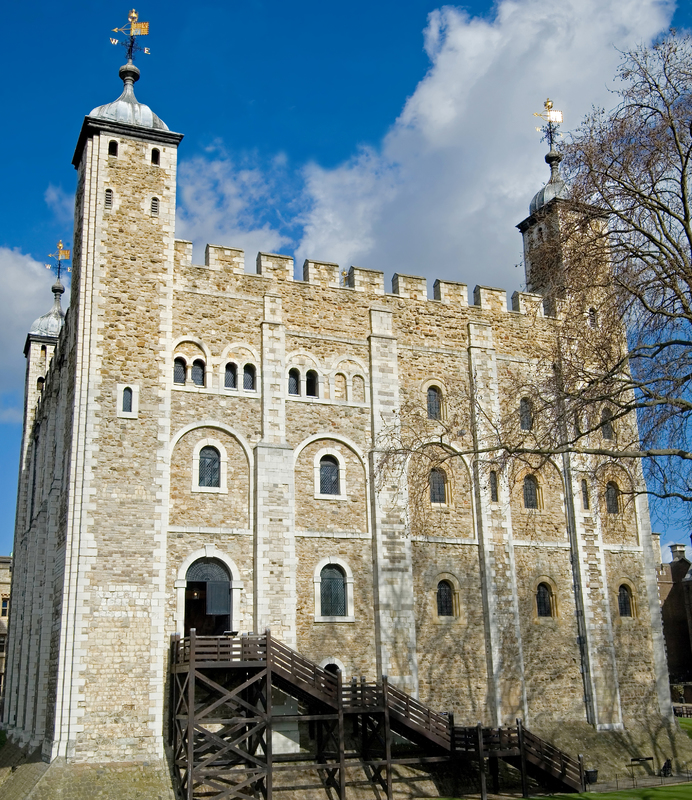
Tower of London
As you may already be aware, the childhood and early years of Elizabeth I's life were not typical – even for royalty. Her father, Henry VIII, fell in and out of love with his first wife, Catherine of Aragon due to a number of reasons. On January 25, 1533, he secretly married the mother of Elizabeth I, Anne Boleyn. On June 1, 1533, the coronation of Anne Boleyn was held and three months later Elizabeth I was born – on September 7, 1533. Unfortunately, for Elizabeth, it wasn't long before Henry VIII and Anne Boleyn separated after the birth of a stillborn son. Anne was taken to the Tower of London and – a short while later – executed.

Each time Henry VIII remarried, Elizabeth's life changed. One wife sought to repair the rift that had occurred between the father and daughter but others did not show any concern or care for the precocious child. Elizabeth was thirteen years old when Henry VIII died. Edward VI, child of Henry VIII and Jane Seymour, came to power to rule for seven brief years. During his reign, Protestantism flourished. After his death, Mary, her elder sister and daughter of Henry and Catherine of Aragon, ascended the throne and brought with her five years of bloodshed. During the reign of Mary, Elizabeth was unknowingly involved in plots against her half-sister and was arrested and even taken to the Tower of London. Eventually, she was released and lived quietly until the death of Mary on November 17, 1558.

What could people expect from their new queen? 


Elizabeth had learned from her brother and sister. People soon realized Elizabeth was her father's daughter. She identified herself with the people's wants and needs. Elizabeth knew that the ruling monarch must be understood by all. Throughout her rule, she thought it was important to justify her actions to her subjects. In carefully composed speeches, which were also printed as pamphlets, she explained to her people her motives and reasons. Elizabeth only wanted the best for her subjects.

Rose with Elizabeth I Quote

Elizabeth inherited a nation divided by religion and wanting a secure line of succession. She needed to settle the matter of religion or possible face a civil war. And whenever Parliament was in session, the matter of marriage and succession would be discussed. Parliament made numerous requests of their queen to marry. In 1559, they further requested that she marry within the realm. Elizabeth replied with an evasive speech composed and written by herself.

Rose with quote from Elizabeth I 1559Elizabeth had many suitors including Philip of Spain, who was married to her late sister, and Erik of Sweden. She understood that her best political weapon was her hand in marriage. She was capable of playing nations against each other for the best deals. She also did not want to serve any master but herself.

Smallpox Outbreak 


During the early 1560's there was a smallpox outbreak that reached epidemic proportions. On October 16, 1562, Elizabeth fell violently ill. She became incapable of speech and slipped in and out of consciousness. it was feared that her death was imminent. Her privy council became worried because Elizabeth had not named a successor. What would happen to the kingdom? As the court prepared to mourn the death of their queen, she regained consciousnesses and began making provisions for her nation after her death. Robert Dudley, whom she was rumored to have been in love with, would be named Lord Protector of England. After this decision was made, the markings of smallpox appeared on her hands. The worst of her illness was over and she rapidly grew better.

"Marry where you please, whom you please, and as soon as you please – 

but marry." 


After her recovery from smallpox, the question of marriage and succession was even more pressing. On January 12, 1563, her second Parliament opened and they humbly petitioned her to marry. They warned her if she did not name her successor, the nation may face civil war or the meddling of foreigners after her death. What would happen to her people then? She thanked them for their concern but reminded them she did not think marriage should be discussed in Parliament.

After the Commons had made this petition, the House of Lords drafted their own petition. They requested her to "marry where you please, whom you please, and as soon as you please – but marry." Elizabeth was angered. She made allowances for the Commons but thought the Lords knew better than to involve themselves in the matter of marriage. She told them she had already addressed their questions of marriage previously and she would marry when it was convenient.


The question of who Elizabeth would marry and who would succeed her would continue until her death on March 24, 1603. Elizabeth left England a strong powerful nation, however she never married and did not name her successor. Her cousin, James VI of Scotland, would succeed her as James I of England.

In future weeks, I will share more about Henry VIII and the Tower of London. Perhaps, I will even write a follow-up post on Elizabeth I as this just touched upon a few points in her very interesting life. Please also find a timeline of Important Events before the Reign of Elizabeth I to download.

Image of Elizabeth I from Openclipart.


I own most of these books and the VHS of Elizabeth (1998). (Yes, I still have almost all of my VHS tapes.) Clicking through these links and making a purchase may earn me a small commission at no cost to you. 


I linked up with the following blog(s):