Showing posts with label Kids Crafts. Show all posts

Friday, October 30, 2020

Book Club: Make Way for Ducklings

Text: Book Club: Make War for Ducklings; background of trees; logo of A Mom's Quest to Teach

This post contains affiliate links. For more information, please see my Terms of Use and Disclosure Policy page. Thank you.

One of the books that has been included in several of our homeschooling curricula has been Make Way for Ducklings by Robert McCloskey. While using StoryTime Treasures from Memoria Press, we read through the book with our son. Then, we had the pleasure of reading Make Way for Ducklings again with God's Creation from A to Z from My Father's World with our daughter. After reading the book multiple times, I decided we should make a cute craft to go along with it, too.


book cover of Make Way for Ducklings
When you let the kids play with googly eyes, you see what happens. 


The Story 

Make Way for Ducklings takes readers on a journey with Mr. and Mrs. Mallard as they plan where they are going to live and start a family of their own. The book offers many opportunities for children to practice their reading and rhyming as they learn the names of the ducklings – Jack, Kack, Lack, Nack, Ouack, Pack, and Quack. Parents can also discuss the importance of following traffic rules when crossing the street.

Text: Book Club: Make Way for Ducklings; A Mom's Quest to Teach; craft ducklings photo; clip art of duck footprints


What About Ducks? 

Ducks are very interesting birds to study. We are fortunate that there are several lakes within a short driving distance that we can visit to see them in person. In the past, I have worked with ducks while working in education at a city zoo.

  • Ducks live in both fresh water and salt water 
  • Male ducks are called drakes, female ducks are called hens, and baby ducks are ducklings 
  • Depending on what types of food a duck eats, they may have to dive deeper into the water 
  • Ducks have been domesticated and kept on farms or as pets for more than 500 years 
  • Ducks are raised for their eggs, meat, and feathers 
  • Ducks' feathers have a waterproof quality to them – hence the saying, "Let it roll off you, like water off a ducks' back."
  • In many species of ducks, the males and females have different feather colors and patterns

Materials 


Steps

1. Gather all of your materials. 

materials for craft - scissors, construction paper & book Make Way for Ducklings

2. Lay out all of the materials onto the blue construction paper (you will only need have a sheet of construction).

3. Glue the body of the duck onto the blue construction paper.  

putting glue onto back of duck's construction paper body

4. Glue on the head of the duck onto the blue construction paper. 

gluing on of head and duck of construction paper craft

5. Glue on the eyes. You can use googly eyes if you or your children wish.

head and body and eyes of construction paper duck


6. Glue on the beak and add the nostril. 

completed construction paper duck craft

7. If you are adding feathers, you can add them for the wings or tail.

If you have any favorite duck-themed crafts or children's books, please share in the comments! 


Friday, October 23, 2020

Crafts: Brown Bear, Brown Bear, What Do You Look Like?

text: Crafts: Brown Bear, Brown Bear, What Do You Look Like? clip art of bear foot prints; logo of A Mom's Quest to Teach

This post contains affiliate links. For more information, please see my Terms of Use and Disclosure Policy page. Thank you.
Our children love creating crafts – especially if they are centered around animals! So this month, I decided we should make a brown bear craft inspired by Brown Bear, Brown Bear, What Do You See? Our youngest son was gifted a copy of the book when he was quite little, and we have been enjoying this classic story ever since.

While I designed the craft, I did a little bit of research so I could share some Brown Bear facts with our children. What do they look like? Where do they live? What types of food do they enjoy eating? 


Brown Bear Facts 


  • They are omnivorous mammals living in forest habitats and mountains 
  • Brown Bears can weigh up to 1,500 pounds 
  • They are often solitary except for gathering along salmon-spawning streams and other areas where they go for food 
  • They often give birth to twins, but litters can have 1 to 4 cubs 
  • There are many subspecies of Brown Bears, including ones known as Kodiak and Grizzly 
  • They have short, thick legs 
  • Brown Bears can hibernate for four to six months in their den during the winter months 
  • They live up to 25 years in the wild and 40 years in captivity 

Text: Crafts: Brown Bear; A Mom's Quest to Teach; photo of brown construction paper bear on black construction paper


Materials 


Steps 


1. Gather your materials. I sketched the shapes needed for the Brown Bear before we made the craft. 


2. Lay all the pieces onto the construction paper chosen for the background. Glue them on the construction paper one by one. 

3. Glue on the legs for the bear. The bear is in profile. 

gluing the four legs of the brown construction paper bear onto the black construction paper


4. Glue on the body, head, and ear of the bear. 

gluing ear onto brown construction paper bear

5. Glue on the snout of the bear and then a googly eye for your bear. 

brown construction paper bear craft completed

6. Design the background. Draw a cave, a stream, or the night sky. 

completed brown bear construction paper craft

brown bear craft; drawing grass onto construction paper


Do Your Children Want to Learn More about Animals? 


SchoolhouseTeachers.com offers many interesting and educational opportunities to learn about animals. One such course is God's Beautiful Creatures, which will introduce your young homeschooling child to 120 different animals using eBooks and activities to help them learn about backyard animals, colorful animals, desert animals, furry animals, and more! 

Text: God's Beautiful Creatures; SchoolhouseTeachers.com; dog & kitten photograph


You can even incorporate art into your studying of bears with Learning About Art offered by SchoolhouseTeachers.com. In a previous post, I shared our experiences with the course when our children were younger. Over the course of ten lessons your young homeschooling children will be introduced to artists, letters, animals, drawing techniques, and more! 

If you are homeschooling children in third-fourth grades, you might find A World of Animals science course at SchoolhouseTeachers.com to be a useful one. In this text-based course, your children will learn about different species of dogs, owls, hamsters, and grizzlies!

Mama Bear Sale - less than $14 a month Code: MamaBear22


Text: How do you know what he wants to be someday? Let him pick his own classes. Image of boy thinking


Friday, September 11, 2020

Learning About the Letter K: K is for Kings

Text: Learning About the Alphabet: K is for King; background confetti; A Mom's Quest to Teach logo

This post contains affiliate links. For more information, please see my Terms of Use and Disclosure Policy page. Thank you.

Over the course of twenty-six posts, I will introduce my own simple lessons for the letters of the alphabet. I will provide ideas and suggestions for a week's worth of activities.

When teaching our children about the world around them, it is important that they become familiar with how our country is governed and how other countries are governed. Talking about the letter K with preschoolers is the perfect time to discuss kings and how they are different from presidents. You can introduce many different topics while teaching the letter K to your preschooler, too. Don't forget all the awesome animals from Australia that start with the letter K, such as kangaroo, koala, and kiwi.

Kings


Facts about kings and monarchies to share with your children:

  • A king (or queen) rules in a monarchy 
  • A monarchy is a form of government with a single leader who rules for his or her life 
  • There used to be lots of monarchies throughout the world but now kings and queens are rare 
  • A king rules for life and usually his son (or daughter) will inherit the throne when he dies as monarchies are hereditary 
  • In Ancient Egypt, kings were known as Pharaohs 
  • In Russia, the king was known as the czar 
  • Other names for kings include: emperor or royal highness 
  • Today, monarchies still exist in several places like the United Kingdom, Spain, Sweden, Morocco, Jordan, and other places 
  • Famous kings through history: Henry VIII of England, William the Conqueror, Peter the Great of Russia, Alexander the Great, Charlemagne, Tutankhamen, Frederick the Great of Prussia, Ramses the Great, Charles V of the Holy Roman Empire  


King Paper Bag Puppet


Text: A Mom's Quest to Teach: Learning About the Letter K: K is for Kings; King puppet; clip art of Henry VIII & deerCreate a paper bag king puppet with your children!

Materials


Steps


1. Gather all your materials.

construction paper, buttons, etc used to make king puppet


2. Either pre-cut the pieces, draw shapes for the pieces and have your children cut them out, or have your children draw the different pieces they will need and cut them.

3. Glue on the face of the king and then glue on the robes of the king.

king's robe and face glued onto paper bag for puppet


4. Glue on the mouth and then the beard of the king.

gluing on the construction paper beard onto the king paper bag puppet


5. Glue on the eyes of the king, draw a nose, and draw a mustache.

drawing on mustache onto paper bag king puppet

6. Glue on the king's crown.

paper bag king puppet

7. Pick buttons for the king's robe and glue them onto your puppet. 

beads and buttons

king paper bag puppet


8. After the glue dries, the kings are ready to rule their nation. 

Additional Activities and Ideas to Talk about Kings


Other Topics 


Australia Animals 


Read about the animals from Australia with several different posts from A Mom's Quest to Teach. Also, check out some of my favorite books about Australia and its native animals.

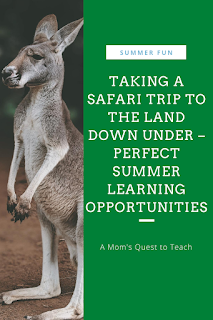
Text: A Mom's Quest to Teach; Learn about Australian animals on a summer safari for preschoolers; echidna craft Text: Taking a Safari trip to the land down under; perfect summer learning opportunities; background image of dot art emu text: Crafts: K is for Kiwi; A Mom's Quest to Teach; kiwi craft & kiwi plush


Matching Activity 


Download a copy of a simple matching activity to complete with your preschooler. In addition to this matching activity, you can also use old magazines and ask your child to cut out pictures of animals, people, objects, etc. that start with the letter K and create a Letter K Collage.


Tuesday, September 1, 2020

Crafts: W is for Watermelon

text: Crafts: W is for Watermelon; background of watermelon; logo of A Mom's Quest to Teach

This post contains affiliate links. For more information, please see my Terms of Use and Disclosure Policy page. Thank you.

During the summer months, talking about the fresh fruits and vegetables available is a great way to introduce the idea of eating healthy to your children. We decided to spend a bit of time talking about the variety of locally, nationally, and internationally grown fruits and vegetables. This led to a discussion about watermelons.

Watermelons are a vine-like flowering plant that is grown in tropical to temperate climates or places where the temperature remains at or above 77° F. They are red to pink in color with black seeds (there are seedless varieties) with a green rind. There is actually evidence to support its being considered both a fruit and a vegetable. Botanically, it is considered a fruit but it is classified in the same family as gourds and is harvested like a vegetable.

Activities


Use this free worksheet to match the names of fruit to clipart images of these popular treats. Download HERE!

Spend some time taste-testing different fruits and vegetables with your children. Please be mindful of allergies.

Start a garden! During the year, take the time to research which fruits and vegetables would do well growing in your area. Plot out a garden spot and start growing your own crops with your children.

W is for Watermelon Craft

Text: Crafts: W is for Watermelon; A Mom's Quest to Teach; complete W is for watermelon craft

Materials


Steps


1. Gather all materials.

green construction paper, pink tissue paper letter Ws, beads

2. Draw and cut out the letter W. We used pink tissue paper. If you wish, you could use pink construction paper.

3. Glue on the letter W.

4. Glue on beads or seeds for the watermelon seeds - or - paint the seeds onto your letter W.


gluing beads onto pink letter W

Optional step: Paint the rind onto your letter W.

 5. Write W is for Watermelon on your craft.

W is for Watermelon completed craft with beads glued on pink letter W


Bonus for Video Gamers! If your children enjoy Minecraft, you can connect melons to the popular game because melons are one of the food items (e.g., used in potions) in the game.

Thursday, August 6, 2020

Crafts: K is for Kiwi

text: Crafts: K is for Kiwi; logo of A Mom's Quest to Teach; background photo of hills

This post contains affiliate links. For more information, please see my Terms of Use and Disclosure Policy page. Thank you.

kiwi plushOn a trip to the craft store in the late fall, we picked up the cutest kiwi plush. It is bright and colorful, not at all like the actual flightless bird, but our daughter fell in love with it. I must admit to falling in love with the soft plush, too.

When I was thinking about what craft to do for the letter K, I was trying to come up with something that I had not seen done. Kites and kangaroos are popular letter K crafts but why not a kiwi? It's the perfect opportunity for our children to make an adorable craft and learn more about this interesting bird from New Zealand.


clip art of a kiwi from wpclipart.com

Facts About Kiwis 


  • Flightless 
  • Loose, hair-like feathers 
  • Strong, powerful legs
  • No tail 
  • Tiny, almost non-existent wings of one inch 
  • Native to New Zealand 
  • Can live 30 to 50 years 
  • Lays one (maybe two) eggs in each clutch – they may have three clutches a year 
  • The heaviest kiwi – the brown kiwi – can weigh 3 to 11 pounds 
  • Even though kiwis are about the size of a chicken, their eggs are as big as an emu egg 
  • Classified in the same family – ratite – as its cousins the cassowary, emu, ostrich, and rhea 
  • Has a highly developed sense of smell 
  • Eats grubs, worms, bugs, berries, and seeds 
text: Crafts: K is for Kiwi: A Mom's Quest to Teach; photo of letter K with a construction paper kiwi; plush kiwi


Materials 


Steps 


1. Gather all the materials. If your children are old enough, they can draw the shapes or cut out the shapes you draw for the craft.

construction paper; letter k cut out of construction paper; glue stick; scissors


2. Glue on the letter K.

construction paper craft; glue stick; plush kiwi

3. Glue on the body of the kiwi.

4. Glue on the feet - they should stretch to the bottom two parts of the letter K.

gluing legs of construction paper kiwi onto letter K with glue stick


5. Glue on the head and beak. The beak should stretch to one of the top parts of the letter K.

gluing construction paper head of kiwi on letter k


6. Glue on the eye. Only one - the kiwi is in profile!

Construction paper kiwi glued onto letter K


Text: Summer Fun: Learn About Australian animals on a summer safari for preschoolers; A Mom's Quest to Teach; photo of koala  text: Summer Fun: Talking to Safari trip to the land down under - perfect summer learning opportunities - A Mom's Quest to Teach; photo of kangaroo

Thursday, July 9, 2020

Crafts: J is for Jump Rope

Text: Crafts: J is for Jump Rope; logo of A Mom's Quest to Teach

This post contains affiliate links. For more information, please see my Terms of Use and Disclosure Policy page. Thank you.

Do your children enjoy jumping rope? Or perhaps you call it skipping rope? For the sake of this craft, we are going to call it, "jump rope," because J is for Jump Rope!

Background


Rope has been used for skipping for a long time. There have been examples of rope-jumping for fun and exercise in Ancient Phoenicia, Ancient Egypt, and Ancient Greece. Even though jumping rope today is often done mostly by girls, it was an activity in history that was primarily done by boys and men.

The activity of jumping rope spread through the ancient world to Medieval Europe and eventually to America, possibly by the Dutch. In fact, the version of Double Dutch has been attributed to the theory that it might have originated among immigrants from the Netherlands in Colonial America. In Double Dutch, two long jump ropes are used which are turned in opposite directions and more than one player may jump at the same time.

Jump rope can be done by oneself or with friends. Those friends can either turn the rope or jump in depending upon the length of the rope or the style of jump rope being done.

Activities


text: Crafts: J is for Jump Rope; A Mom's Quest to Teach; photo of letter J made of construction paper with yarn glued on itIn addition to the traditional ways to jump rope, you can incorporate a variety of other games using the jump rope and skipping or jumping.

PLEASE NOTE: Exercise caution when playing any games with jump ropes. Do not leave children unattended.

  • Snake in the Grass: Two children move the jump rope back and forth along the ground or floor while one child tries to jump over the snake without touching the rope
  • Math Facts: Skip while reciting math facts such as counting by twos, threes, or other numbers 
  • Skip to a Song: Jump rope to the rhythm of a popular nursery rhyme or song
  • Helicopter: One child slowly spins the jump rope in a circle along the ground or floor while the others form a circle around that child and try to jump over the rope as it comes their way 


J Is for Jump Rope Craft 


Materials


Steps


1. Gather all materials.

materials for craft: yarn, scissors, glue, glue stick, construction paper

2. Draw and cut out letter J on construction paper.

3. Glue the letter J onto a second sheet of construction paper.

letter J upside (made of construction paper); glue stick; purple construction paper

letter J made of construction paper glued onto purple construction paper

4. Cut pieces of the yarn to attach to the letter J.

letter J made of construction paper glued onto purple construction paper; gluing yarn onto letter J

5. Glue the yarn (or rope) to the letter J.

Letter J made of construction paper glued onto purple construction paper with yarn glued on it


Looking for more crafting posts? Please check out my posts: E is for Enderman and A is for Alligator.