Showing posts with label English History. Show all posts

Tuesday, September 7, 2021

Book Club: Book Review of The Barrister and the Letter of Marque

A Mom's Quest to Teach: Book Club: Book Review of The Barrister and the Letter of Marque  - logo of A Mom's Quest to Teach on light blue background

I received a COMPLIMENTARY copy of this book from the publisher in exchange for my honest opinion. I was not required to write a positive review, nor was I compensated in any other way. This post contains affiliate links. For more information, please see my Terms of Use and Disclosure Policy page. Thank you.

I really did not want The Barrister and the Letter of Marque by Todd M. Johnson to end. I thoroughly enjoyed reading how William Snopes gathered information for the trial of Captain Tuttle so much that I was sad when I approached the end of the story. Did I want to know the outcome of the trial? Yes! But I would have loved to read more about the characters. 

About the Novel 

Set during the Regency era of England (1795 to 1837), The Barrister and the Letter of Marque introduces readers to a range of characters, from the pickpockets of Whitechapel to the Prince Regent himself, and brings them all to life. If you are a fan of British history or Regency novels, there are so many locales you will recognize, including Newgate Prison, Whitechapel, The Old Bailey, and the ports of the Thames.

Lady Madeleine Jameson seeks out representation for her cousin – Captain Harold Tuttle. She needs the barrister, William Snopes, to prove Captain Tuttle innocent to keep him from the gallows as well as rescue her investment in the Padget and its cargo acquired in the Indian Sea. 

Before Snopes even agrees to take the case, he and his associates are met with difficulties at every step. They can't even meet Captain Tuttle for a long while because no prison will admit to holding him captive. The Crew scatters once they are released from the ship, including the important first mate who had seen the Letter of Marque. 


A Mom's Quest to Teach: Book Club: Book Review of The Barrister and the Letter of Marque  - photograph of the book


What Is a Letter of Marque? 

A letter of marque is a document issued by a government (in this case England) that authorized the person carrying the letter to act as a privateer. The private person would be able to attack and capture vessels or seize cargo from the ships of nations with whom the privateer's country is at war. So usually, letters of marque were only issued during times of war to private persons. In The Barrister and the Letter of Marque, the letter was issued to Captain Tuttle of England to enable him to attack and seize the cargo of a French ship, even though England and France were no longer at war. Without this document, Captain Tuttle would have engaged in an act of piracy like he was charged by the British government. So when it goes missing the night he returns from his voyage, things become very difficult. 

In addition to seeing how the rich live – through a ball and a few other scenes involving Lord Brummell – we also read of The Lanyard Pub in the East End and the home of the solicitor, Obadiah Cummings. Finally, we get a peek into the lives of the ruffians of Whitechapel when we read of Lonny McPherson and how he runs his crew.


A Mom's Quest to Teach: Book Club: Book Review of The Barrister and the Letter of Marque - photograph of the book and quote from the book


My Thoughts 

I enjoyed reading The Barrister and the Letter of Marque immensely, from the prologue (where we learn why William Snopes turned his back on his privileged life) to the epilogue (where life appears to return to a happy normal for William Snopes, Edmund Shaw, and Obadiah Cummings), each scene was well written and interesting. 

I found William Snopes to be a most intriguing character. I looked forward to seeing what steps Snopes would take next as he prepared the case. I enjoyed reading the conversations between Snopes and Father Thomas, as well as learning more about Snopes' personal background. Of all the characters, Snopes was definitely the most developed. 

While there is a hint of romance to The Barrister and the Letter of Marque, that is not the focal point of the novel. At the heart of the matter is the trial of Captain Tuttle and the journey to collect evidence to prove his innocence. This work of historical fiction has a heavy mystery novel feel to it, and I think it all ties together very nicely. If you enjoy historical fiction, I would recommend The Barrister and the Letter of Marque.


Tuesday, June 16, 2020

Book Club: Book Review of The Ravenmaster: My Life with the Ravens at the Tower of London

raven clipart; logo of A Mom's Quest to Teach; cover of The Ravenmaster book; text: Book Club: Book Review of the Ravenmaster: My Life with the Ravens at the Tower of London

This post contains affiliate links. For more information, please see my Terms of Use and Disclosure Policy page. Thank you.

The Ravenmaster: My Life with the Ravens at the Tower of London by Christopher Skaife is a perfect read for those interesting in history and animals (in particular ravens). It is an excellent book that brings readers behind-the-scenes to learn more about the people who care for and about the ravens who live in the Tower of London. The history, folklore, and tales surrounding the ravens and why they are important to England are presented by Christopher Skaife, the current Yeoman Warder.

The Ravenmaster introduces us to the life of Christopher Skaife and how he became the Yeoman Warder at the Tower of London. We get a brief glimpse into this private life learning about why he joined the military and some of his experiences as a Drum Major. Skaife also shares his theories and ideas regarding the history and care of the ravens.

Text: Book Club: Book Review; image of book cover of The Ravenmaster

History of the Ravens


During the reign of Charles II, John Flamsteed, a young astronomer, said that the nesting ravens were obstructing his view. Flamsteed wanted to get rid of them. The story continues that someone pointed out to King Charles II that ravens had always been living in the Tower of London. It would be a bad omen if the ravens were removed from the Tower. The legend then developed that ravens must be kept at the Tower or the kingdom would fall.

Skaife hasn't found any mention of this legend prior to the late 19th century. There is hardly any mention of ravens in the tower's history at all. It is a lovely story that is part of the history of the United Kingdom.

What do ravens eat? Ravens are omnivores – they eat both plants and meat. They are scavengers and will eat carrion and garbage and at the Tower, they will steal sandwiches from tourists and catch mice. And at the Tower of London, a special treat is dog biscuits soaked in blood.

My Thoughts 


The Ravenmaster is a very well-written book – easy to read with each chapter flowing into the next. Even though Skaife provided lots of information regarding his job as a Yeoman Warder and scientific facts about ravens, I did not find the book difficult to follow or understand. I would recommend The Ravenmaster: My Life with Ravens at the Tower of London to those who enjoy history and learning about animals – ravens in particular. If you enjoy memoirs and biographies, this book might also be of interest to you.

If you want to see photos of the ravens at the Tower of London, check out the Instagram page of Christopher Skaife. Or if you want to read more about the Tower of London, check out my Blogging Through the Alphabet post.


Thursday, January 30, 2020

Book Club: The Worst Jobs in History

Book Club: The Worst Job in History by Tony Robinson; Book Cover and A Mom's Quest to Teach Logo

This post contains affiliate links. For more information, please see my Terms of Use and Disclosure Policy page. Thank you.

More than a few years ago, I remember watching a fascinating television series hosted by Tony Robinson on one of the history channels. Many may know Tony Robinson either the comedy series Blackadder or the historical series Time Team which focused upon archaeological investigations. The series that I really enjoyed and learned lots of interesting facts to share with my high school students was The Worst Jobs in History. A few years ago I found the book that relates to the television series and put it on my wishlist. Last year my husband surprised me with a copy and I set about to read it in 2019. As it turns out, it was on my list of books to read in 2019 but I never actually got to finish The Worst Jobs in History: Two Thousand Years of Miserable Employment so I read it as part of the mini-challenges for The AtoZ Reading Challenge 2020.

What is The Worst Jobs in History About? 


The book provides a brief historical look at over 50 jobs from early times to the Victorian Era with a focus upon the United Kingdom. Whether you are familiar with the history of the time periods discussed or not, you will be sure to learn many new things. Some of which you can share over the dinner table. Others are best saved for a time when no one is eating. 

Facts About the Time Periods 


400 Years of Roman Rule in Britain


Book Review; A Mom's Quest to Teach; book cover of The Worst Jobs in HistoryJulius Caesar invaded Britain in 55-54 BC and – for the first 100 years or so – Roman involvement in Britain was hands-off and diplomacy was used. With Claudius coming to power, things changed greatly and invasion and conquest were the names of the day. The Romans created permanent settlements, developed a network of roads, and divided up the countryside to rule it more effectively.

As Robinson states in Worst Jobs in History, "one of the main reasons the Romans invaded Britain was to get their hands on our metals and minerals." The Romans needed lead (for water pipes and making into pewter), silver (for coins and tableware), and gold (ornaments). Gold mining was one of the worst jobs because of the dangers of working underground and backbreaking labor. 

The Middle Ages 


The Middle Ages is a time period where the name doesn't really suit the time period anymore. It was originally called that because it was between the 'Dark Ages' and the 'Modern Era' that was brought in by the Renaissance. So it really isn't in the Middle Ages anymore.

Some of the more recognizable worst jobs in history from the Middle Ages are those of the Arming Squire who would dress a knight for battle and tournaments, the wise woman who has been depicted in numerous television series and movies like Blackadder, and the Leech Collector - haven't we all heard about how doctors of the Middle Ages used leeches for everything?


Tudor Times


The Tudors started with a bang when Henry VII was victorious at the Battle of Bosworth Field. His successors, including his son Henry VIII, would usher in a new era of British history and be remembered into the present day with books, movies, television series, and more. Henry VIII would break from the Roman Catholic Church and his daughter Elizabeth I would bring about the Golden Age for her nation.

The first worst job of the Tudor time that Robinson discusses is that of Executioner. This makes total sense as one of the reasons why Henry VIII is so well-known is due to the fact that he had wives, political enemies, and others imprisoned and executed at the Tower of London. And his daughter Mary I also executed a great number of people when she tried to change the nation back to Catholicism. 

painting of Oliver Cromwell from wpclipart.com
Oliver Cromwell (image from wpcliaprt.com)

Stuarts Rule England


The Stuart time period in English history started when James VI of Scotland succeeded to become James I of England – joining the two countries together under one royal family. The Stuart family would rule until 1714. This was also a time when the people rose up against the monarch (Charles I) and started a republic for a brief period with Oliver Cromwell in charge. Some have even suggested the execution of Charles I was the starting point that led to the American Revolution.

Personally, I think the worst jobs listed by Robinson are those relating to that of the Black Death. The Great Plague arrived in Britain in 1665 and a great number of tasks needed to be completed in relation to it – including those who were searchers of the dead, plague buriers, and dog and cat killers (these animals were thought to spread the plague).

Georgian Times


The next time period in British history was ruled over by the Hanoverian kings starting with George I. This was another period of immense change in history with the American Revolution, the Industrial Revolution, the French Revolution, the Napoleonic Wars, and colonization and expansion.

While reading about the Georgian Worst Jobs, I found quite a number that were interesting such as the Bath Guide. I had no idea that their skin would be turned orange due to the high iron content in the water nor that they would be working in mucky waters as people with skin diseases soaked in the waters. I also learned where so many phrases come from such as "learning the ropes" and "loose cannon" when reading about the worst jobs in the Navy. 
painting of Queen Victoria from wpclipart.com
Queen Victoria (image from wpclipart.com)

Victorian Era


The Victorian era began when Queen Victoria started her reign in 1837 and ended with her death in 1901. She ruled for over 60 years and, under her reign, the nation grew and expanded but also faced many more changes, too. 

So many of the worst jobs of the Victorian Era are familiar thanks to authors like Charles Dickens. We have heard of chimney sweeps, rat catchers, dustmen, and those working in the workhouses or poorhouses.

What Did I Think? 


This is definitely not a book to read while enjoying your favorite snack. Many of the worst jobs were ones that involved death, urine, rats, or other aspects of human life that are less than pleasant. But The Worst Jobs in History is an excellent book to read to learn more about the people of the past. Not every person held a fantastic job or was a person of wealth in the past. Too often books, movies, and television programs only share with us about the above-average lives or a stylized account of the past. It is always useful to read about those who held the worst jobs to see how far we have come or how far we will have to go.

If you are looking for courses on some of these time periods, check out SchoolhouseTeachers.com.

Drive Thru History: Ancient History images from SchoolhouseTeachers.com

Before the Renaissance: Middle School World History image from SchoolhouseTeachers.com


History Around the World image from SchoolhouseTeachers.com


Monday, August 26, 2019

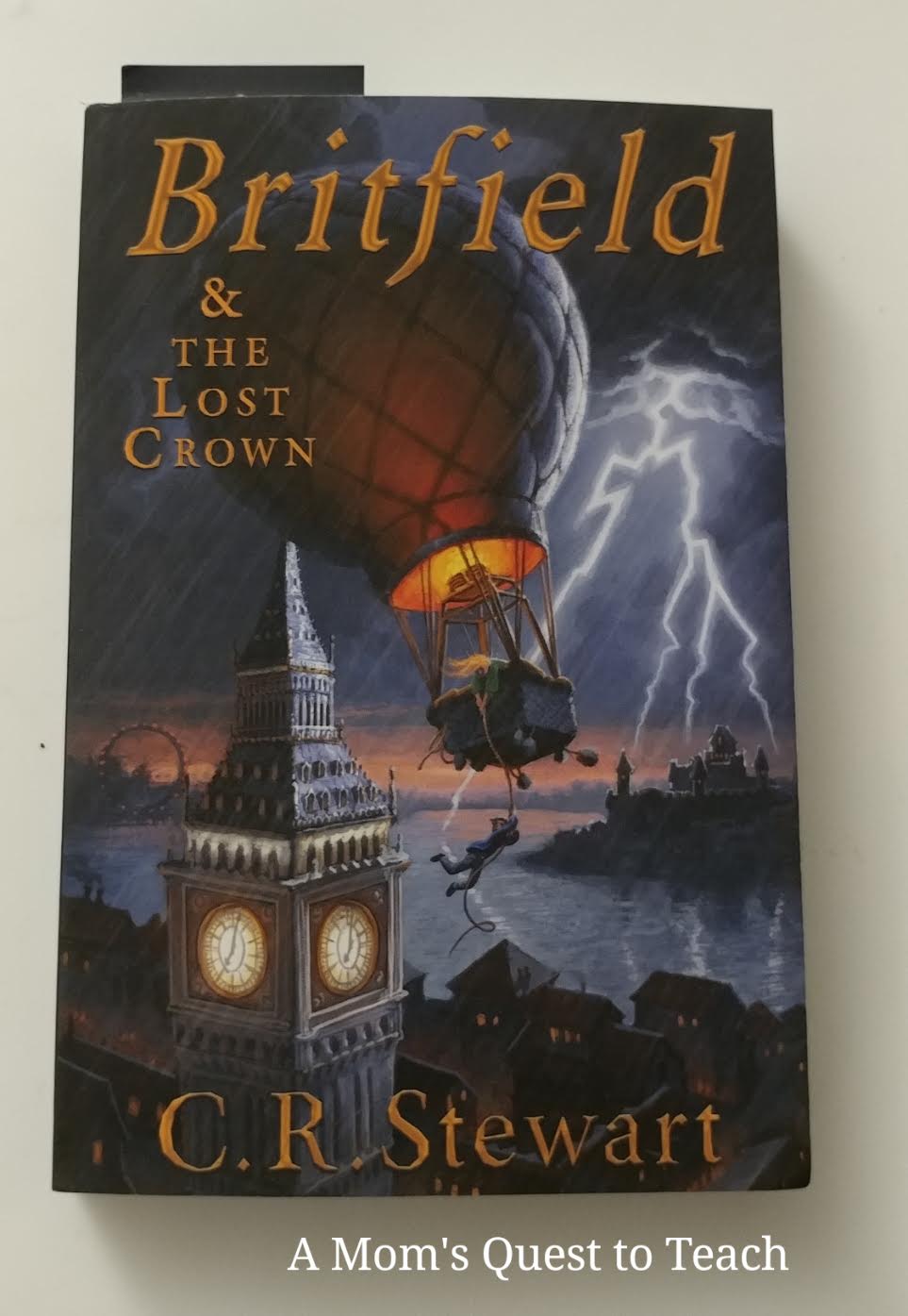
Book Club: Book Review of Britfield & The Lost Crown


I love reading books! In fact, most of our family loves reading but we often have trouble finding books that our teen finds interesting and enjoys reading. When we were given the opportunity to review Britfield & The Lost Crown by C.R. Stewart, I was excited because I thought it sounded very interesting and was hopeful that our teenage son would enjoy it as well.

I read the softcover edition of Britfield & The Lost Crown (386 pages) over approximately a week (with a break in between to pass the book along to our teen). The story is fast paced and the end of each section or chapter entices the reader to continue reading so they can find out what happens next. I know I had trouble putting the book down.

After the table of contents, there are five maps of the key areas of England that Tom and Sarah (the main characters) visit followed by the story itself. These maps are detailed and would help a reader unfamiliar with England, Oxford, Windsor Castle, London, and Canterbury place the characters in the real world. The font is larger than most books – which is really nice for late night reading.


What is the Story?


The cover of the book invites one into a story fraught with danger and excitement. The focal point of Britfield & The Lost Crown is the journey of Tom and Sarah as they escape the orphanage of Weatherly and travel through various cities of Great Britain (including Oxford, London, and Canterbury).

At the beginning of the book, we read how difficult the 56 children at Weatherly had it. They were used by the Grievouses to do manual labor and treated to poor living conditions. There were a few individuals who attempted to help them, like the cook who provided extra food when he could, but overall the lives of the children were only enriched by several books they shared and read.

After discovering that there is something special about Tom – in his file at the orphanage is the word, "Britfield," the children prepare for a daring escape. Tom wants to get out of Weatherly and wants to take his friend Sarah with him. All the children band together to help them and there are some great scenes described as they get out of the orphanage.

During the escape and journey to London, Tom and Sarah quickly learn that 10 pounds is not enough to get them very far. In several occurrences throughout the book, they rely upon the generosity of others, including an Oxford student, a train ticket taker, a taxi cab driver, and an Oxford professor who joins them on their journey. All these take place while Detective Gowerstone is hunting them down and using all the resources available to him (and more) of the New Scotland Yard.

How Did We Include the Book in Our Homeschool?


I set out knowing that I would read Britfield & The Lost Crown in its entirety. As I have stated before, I like to read. I like to read stories (both fiction and nonfiction) set in the United Kingdom. After reading through the first two chapters that were provided as a sample, I was pretty sure I would enjoy the rest of the book.

As it is summer time, we are on a relaxed homeschooling schedule. I asked our teen to read the first couple of chapters and complete the study guide materials for the first two chapters. If he liked the book, I would have him continue reading it when we our regular schedule in September along with using the rest of the study guide.


The Study Guide


We also had the chance to review the 8-week study guide. I only asked our teen to do a few pages of the 83-page long study guide this month but we will be revisiting it in September. The study guide provides a synopsis of the story, a brief biography of the author, student work for all 17 chapters, additional resources, and an answer key. The additional resources are concluding questions regarding plot, theme, characters, and a complete vocabulary list.

The first three sets of questions deal with two chapters apiece while the rest of the units each deal with only one chapter. Each section contains vocabulary questions (these vary from crossword, multiple choice, fill-ins, and more), comprehension questions, going deeper questions, and learn more with technology (which requires the student to do some additional research on different topics).

The comprehension questions are general questions checking on whether or not your child read and understand the material. For example, one of the early questions is: "What is Tom most afraid of? How does it make the escape harder?"

The "Going Deeper" questions ask the student questions to get them to think beyond the story and involve other activities like having them draw a picture of the orphans at Weatherly or of Detective Gowerstone. Another question asks students to think about what makes Oxford University an "aura of privilege and tradition." I can see this question leading to discussions with our teen about local colleges and universities that may or may not be similar in feeling to Oxford.

I like that the "Learn More with Technology" section allows for digging deeper into British history like learning about Winston Churchill, Windsor Castle, Canterbury, and even the significance of tea in British culture. I can easily see some of these questions turning into longer research projects for students who are interested in learning more and more.

My only complaint about the study guide is that there is a watermark feature to the pages which requires the use of more ink in the printing of it.

One of the many vocabulary activities in the study guide.

Our Thoughts


I am very pleased to share that our picky teen—who does not enjoy reading like his father and I do—said he enjoyed it and really liked the characters. He liked reading about the experiences of Tom and Sarah in the orphanage and wanted to read more. This is pretty high honors from our kid who can put down a story or even stop a movie in the middle of a cliffhanger. He isn't like me in that he won't stay up late to finish a book (I did stay up later a few evenings to keep reading Britfield & The Lost Crown).

I found Britfield & The Lost Crown to be an excellent tale woven through the landscape of England. I enjoyed seeing England through the eyes of Tom who was experiencing many things for the first time. Tom had spent most of his life in orphanages. He had never been on the Underground and this was one of his many new adventures as they traveled on the Tube to Waterloo Station. I also liked the creativity of Tom and Sarah. This is an excellent skill to foster in our own children.

My only reservation was that it seemed to wrap up a little too quickly but then again I realize that the book cannot go on forever and that there will be more in the series. In fact, I can't wait until the next one – Britfield & The Rise of the Lion – is released in the fall of 2020.

I would recommend Britfield & The Lost Crown for middle school students through to adults. Even though the main characters of Tom and Sarah, and later Professor Hainsworth, suffer challenges and difficulties, we see them excited and happy to be trying new things and living a great adventure. I think everyone could do with a little adventure in their life.


Want to Learn More about Britfield & The Lost Crown?


Many other families had the chance to read or listen to the audio version of Britfield & The Lost Crown – be sure to check out their reviews!


Friday, April 26, 2019

J is for Jack the Ripper (Blogging Through the Alphabet)


This post contains affiliate links. For more information please see my Terms of Use and Disclosure Policy page. Thank you.

I had several ideas for the letter J (which I may write about in the future) but as I was searching for notes on one of those topics, I came across a folder labeled, "Jack the Ripper." Wow! How did I not think of writing a letter J post about this topic? I won’t go into too many details regarding the murders and victims but present a brief overview and address how studying the case of Jack the Ripper can provide individuals with an opportunity to use their critical thinking skills.


Who is Jack the Ripper?


This is the million dollar question, really. Jack the Ripper is the name ascribed to the serial killer who committed a number of murders in the summer and fall of 1888 (even the number of victims has been argued about). The murders took place in Whitechapel, an area of London which was a den of anti-Semitism, nativism, crime, racism, and other problems common in the 19th century.

There have been many theories as to whom Jack the Ripper actually was over the years. From the first murder to the present day, there has been much written about the topic—as well as movies, documentaries, and other media produced. Almost everyone has their own theory and idea, it seems. There was even an excellent book written that examines a great number of theories (The Mammoth Book of Jack the Ripper edited by Maxim Jakubowski and Nathan Braud).

Ripperologists (yes, this is the name given to people who study Jack the Ripper) disagree about a lot of things and ask many questions. Was Jack the Ripper really Jill the Ripper? Was it the Prince Albert Victor, the Duke of Clarence? Was it Queen Victoria's physician Dr. William Withey Gull? How about the detective himself Inspector Frederick Abberline? A famous author Patricia Cornwell even presented a book about her pick for Jack the Ripper (Portrait of a Killer: Jack the Ripper –Case Closed). Even fictional TV series have presented ideas—Jack the Ripper was a sloppy vampire.

Perhaps the reason why the case still intrigues so many is because of the unknown.


Whitechapel Map from Ordnance Survey Map 1894; modified 2008
1894 Ordnance Survey Map of Whitechapel (see source at the end of this post)

How many victims? Who were they?


The number of victims range from as few as five to as many as thirteen, depending upon to which Ripperologist one turns for information. Included in the Whitechapel Murder files are two women (Emma Elizabeth Smith and Martha Tabram) who were killed before Mary Ann Nichols - who is usually considered Jack the Ripper’s first victim. 
  
There are five women who are considered by all to definitely be the victims of "Saucy Jack": Mary Ann Nichols, Annie Chapman, Elizabeth Stride, Catherine Eddowes, and Mary Jane Kelley. These five women make up the canonical murders. These murders began on August 31, 1888 and ended on November 9, 1888. All the women were in their forties except for Mary Jane Kelley (she was only 25) 

There were several other murders that took place in Whitechapel that are sometimes ascribed to Jack the Ripper (even though most agree that Mary Jane Kelley was his last victim). These include: Rose Mylett, Alice McKenzie, the Pinchin Street torso, and Frances Coles.


How to Study the Case 


While not everyone has at hand the actual primary sources, such as the letters to test for DNA, amateur historians can still scour sources as they are provided online and in books such as those listed in the resources and references section below. It is important to read as much information as possible before making any one decision as to who one thinks Jack the Ripper might actually be. Looking at police records, reports, and autopsy reports (for the less squeamish) can provide interesting firsthand information while reading books like The Mammoth Book of Jack the Ripper or The Complete History of Jack the Ripper by Philip Sugden. These provide much secondary information. It would also be interesting to read Jack the Ripper: The Final Chapter by Paul H. Feldman or Cornwell's Portrait of a Killer to determine whether or not you agree with their choices of James Maybrick or Walter Sickert as the killer. (Both these theories have come into question in recent years and have been given credence as more information has been found.)

In the Media 


From the very beginning, the media—in the early years newspapers—were fascinated with Jack the Ripper. They printed his 'letters,' sensational information about the victims, interviews with vigilantes, and more in the days following the murders. After the 'factually' information was reported in the newspapers, the story of Jack the Ripper interested fictional and semi-fictional storytellers. 


Frederick Abberline (see source at end of post)
The events that took place in the shadows were thrust into the limelight. Movies and TV series were produced to tell the tales. One of my favorite TV series on the subject was the 1988 series starring Michael Caine as Frederick Abberline. While I may not agree with the choice of Jack the Ripper in the series, I find the entire drama very interesting to watch—even all these years later. Years later, Johnny Depp would star as Inspector Abberline in a much more graphic fictional account of the story. And Jack the Ripper even traveled through time using the time machine of H.G. Wells in Time After Time. As mentioned before, other television programs portrayed Jack the Ripper as a vampire taking the fictionalization even further from real events. 


On Site 


There are quite a few ways to see the sites of Whitechapel where the victims met their end. A quick search online finds many Jack the Ripper walking tours. When we visited England in 1997, we took a Jack the Ripper walking tour and even the tour guides had their own theory which they swore was true. So if ever you are in London, perhaps visit the locations yourself and see if you can come up with your own opinion while walking the streets.

Final Thoughts 


Personally, I do not have a theory as to the name or names of Jack the Ripper. Even with the DNA evidence that points to one of the traditional suspects, I think this will remain one of the mysteries of history. However, I can only imagine how the case would attract armchair detectives in today’s social media-reliant world. Do you have a theory?


Resources and References 


The Telegraph: Has the true identity of Jack the Ripper been revealed? – a look at James Maybrick as Jack

Jack the Ripper: a site with histories, victim information, resources, and reading lists

Science: Does new genetic analysis finally reveal the identity of Jack the Ripper? – looking at a police suspect from 1888 as Jack – Aaron Kosminski 

Casebook: Jack the Ripper – this site hopes to bring light to the myths and lies as well as show the humanity of the victims 

Image of Frederick Abberline: originally from Illustrated Police News and found at casebook.org 

Whitechapel Maphttp://www.casebook.org/official_documents/map/images/ord_map_full.jpg and cropped & annotated with seven red dots to show location of seven murders attributed to Jack the Ripper (1894; modified April 2008)


 Looking for more English history-themed posts? 


Why not read about King Henry VIII, Charles Dickens, or the Tower of London


Join us for Blogging Through the Alphabet! 


You are invited to the Inlinkz link party!
Click here to enter


Friday, April 12, 2019

H is for Henry VIII (Part II) (Blogging Through the Alphabet)


This post contains affiliate links. For more information please see my Terms of Use and Disclosure Policy page. Thank you.

Over the course of my history studies, I have spent many hours reading about and studying the Tudors of English history. I have also written a number of papers on the Tudors and given several presentations beyond those in my classroom.

One of the more fascinating Tudors is King Henry VIII. Part of what makes Henry VIII such an interesting study relates to his many marriages and what happened to his wives once their marriage was over.


Divorced, Beheaded, Died; Divorced, Beheaded, Survived 


In an earlier post, I addressed the early years of the life of Henry VIII, his marriage to his first wife, Catherine of Aragon, and their subsequent divorce. After the marriage between King Henry VIII and Queen Catherine of Aragon ended at his request, Henry VIII was ready for his marriage to Anne Boleyn to be confirmed. Archbishop Cranmer declared the secret marriage that had taken place in January 1533 between Henry VIII and Anne Boleyn to be valid. With this, Henry had renewed hopes for a male heir.

By June 1533, Anne Boleyn was crowed Queen but she was still seen as the King's whore to the people. On September 7, 1533, Princess Elizabeth was born, even though astrologers had told the King it would be a boy. With Elizabeth's birth, Anne began losing her power over Henry. In hopes that Henry and Anne's next child would be a boy, the leading subjects began taking the oath to the Act of Succession in March 1534. This Act finalized the idea that Henry and Catherine's daughter, Mary, was illegitimate and was not an heir to the Tudor throne.

Anne had three more pregnancies that ended in stillbirths. In April 1536, the search for evidence for Anne's downfall began. Five men were accused of adultery, including her brother, and they were convicted. Anne was found guilty of adultery and treason. Before Anne's execution, Archbishop Cranmer declared that Anne had never lawfully been married to Henry because of a pre-contract to another man and the King's relationship with her sister, Mary. On May 19, 1536, "the happiest of women" lost her life with a single cut of the blade and Henry wore white in mourning for her.

Several months before Anne's execution, Catherine died and this paved the way for Henry's next marriage after Anne Boleyn. There would be no more questions regarding his divorce of Catherine.


Providing an Heir 


A day after Anne's execution, Henry was betrothed to Jane Seymour and by the end of May they were married. Jane was a modest and shy woman who appeared to be overwhelmed by the royal lifestyle. Jane succeeded in bringing peace between Henry and his first daughter, Mary, who was now 20 years old. From Jane, Henry would receive what he had longed for so many years: a male heir.

"Bound to Obey and Serve"


Prince Edward was born by Cesarean section on October 12, 1537. Jane soon fell ill after the pregnancy probably due to puerperal fever (which was a common hazard for women in this time period after childbirth). On October 24, 1537, at the age of 29, Jane Seymour died. Henry left plans that he was to be buried beside the Queen who never even had a coronation ceremony.


Changes to the Country 


While Henry and Jane were married, the Crown began seizing church property. Shortly after the closing of smaller churches, a rebellion broke out. Jane unsuccessfully pleaded with Henry to restore the lesser monasteries since it was their closing that had caused the rebellion. By the end of the year 1536, the leaders of the rebellion were executed in spite of Henry's promise to send them aid and a promise of a visit to the North. By 1540, all religious houses were closed with Henry receiving he money from them.

Even with three children (one a male heir), King Henry VIII still sought out his next bride. He would marry three more times before dying in January 1547. His reign of England was a decisive one in English history. He brought Protestantism to England through his Reformation. He also brought England back into continental Europe while his foreign policy restored England as a war-faring nation again. Henry is more than just a man who married six times.

Want to learn more about English historical figures and history? 


Read more about Henry VIII, Elizabeth I, and Knights.

Do you want to join the Blogging Through the Alphabet posts this week?

You are invited to the Inlinkz link party!
Click here to enter


Friday, March 22, 2019

E is for Elizabeth I's Speeches and Letters (Blogging Through the Alphabet)


This post contains affiliate links. For more information please see my Terms of Use and Disclosure Policy page. Thank you.

Queen Elizabeth I remains one of the monarchs I enjoy reading about the most. Well, to be truthful, I enjoy learning more about the rest of her family as well. The Tudor period of English history is one of my favorite time periods to study.

One of the assignments in my education classes at college was the preparation of several lessons and the mock teaching of them to my fellow classmates. As a history major, I wrote history lessons including one entitled: An Introduction to Elizabeth I through her speeches and letters.

In order to understand the words of Elizabeth I, it is a good idea to look back on her family's life. A timeline of events prior to her life is a good starting point to understand Elizabeth's point of view. Some of the things to think about include the following questions:

  • When did the Tudors come to power?
  • Who was the father of Elizabeth I? 
  • Who was the mother of Elizabeth I?
  • What was the Great Matter? 
  • What happened to Elizabeth's mother?
  • Who ruled after Henry VIII? Edward? 
  • What happened during the reign of Mary? 

Important Speeches and Letters 


During the lifetime of a leader, they will pen many important letters and make many important speeches. For Elizabeth I, the majority of hers dealt with marriage and religion, as these were two very important topics of her reign. Let's examine a few of the notable ones. 

Response to Parliamentary Delegation on Her Marriage, 1559


On February 7, 1559, the speaker of Parliament requested the Queen marry and a later addition to the petition was that she marry within the realm – not a foreigner. In this 1559 speech, composed and written by Elizabeth herself, she wanted to assure the House of Commons that she would not make the same mistake as her sister, Mary, and marry outside the realm. 

"I am descended by father and mother of mere English blood, 
and not of Spain, as my late sister was." 

While she appreciates their petition, she also reminds them that she does not need to meet their demands as she is the Queen. She believes that God has preserved her and led her in her reign. She will not make a hasty decision, nor one that causes harm to her kingdom or her subjects.


Response to Erik of Sweden's Proposal, 1560


In a letter of statesmanship, Elizabeth writes that she has no affection for Erik (or anyone for that matter) and still wants to live a single life. She writes her refusal to marry him is not because she has not seen him, although she will not marry anyone she has not seen (she is covering all her bases here – no fooling Elizabeth). 

Response to Parliamentary Delegation on Her Marriage, 1566


Necessity forced Elizabeth to answer Parliament in regards to marriage again. On October 21, 1566, the Lord Treasurer met with her to explain that both the House of Commons and the House of Lords petitioned her regarding marriage and succession. They begged her to either declare her will on the matter or put an end to Parliament so they could all go home. 

Elizabeth was very angry with them. She had already answered their questions regarding marriage. She promised them she would marry and would do so as soon as possible – when it is convenient. When addressing the second point, succession, she said she was annoyed that they – the foot – should dare to direct her – the head. It was not up to Parliament to meddle in her affairs. 

"My Lords, do whatever you wish. As for me, I shall do no otherwise than pleases me. Your bills can have no force without my assent and authority." 

On Religion, 1583


In this speech, Elizabeth is reminding her people that all matters must take root in religion. The slandering of the queen by the clergy cannot be tolerated. Elizabeth has read God's book, the Bible, and believes God has made Britain wonderful for them. She will rule her subjects by "God's holy true rule." 

The Farewell Speech, 1601 


The love of Elizabeth's subjects was like a jewel to her. She was very thankful to be queen over them. she loved her subjects. 


Elizabeth was grateful to be God's instrument to preserve her people from peril, dishonor, and oppression. She never set her heart on worldly goods but ruled in answer to a higher judge – God. 

"I see all and say nothing" – Elizabeth's motto 


Elizabeth I had learned greatly from her sister's mistakes and knew that she had to identify herself with her subjects, her people. In order to not rely upon Parliament, who were forever pushing her to marry, she cut her expenses in half and established a solid credit line. Elizabeth did not have to rely upon Parliament to request money. 

In relating her thoughts and opinions to Parliament and her subjects, Elizabeth displayed her fine education. She was an eloquent writer who used involved sentences to share her thoughts on many subjects including those of religion, marriage, and succession.

Looking for more information about the Tudors? Why not read about Henry VIII, Elizabeth I, or the Tower of London

Resource and References 


Elizabeth I Speeches: Response to Parliament (1566), Spanish Armada, Farewell Speech 

Selected Writings and Speeches of Elizabeth I at Fordham University

Free Download of Tudor Events Timeline 


Blogging Through the Alphabet 


Thursday, November 8, 2018

Book Club: Book Review of Lady of a Thousand Treasures

Book cover of Lady of a Thousand Treasures


Disclaimer: I received this book for free from the publisher in return for my honest opinion. All thoughts and opinions are my own. This post contains affiliate links. For more information please see my Terms of Use and Disclosure Policy. Thank you.

I really enjoy historical fiction – perhaps it is because I was a history major and a history teacher – so I jumped at the chance to review Lady of a Thousand Treasures by Sandra Byrd from Tyndale Fiction. The novel is centered around Eleanor Sheffield, an evaluator of antiquities, and her attempt to advance her family business and make an important decision regarding a "thousand treasures." We also meet Harry, Lord Lydney, and many other people important to Eleanor's story.

"A threading of voices spooled throughout the expansive chamber wherein we waited..." 

The novel opens in 1866 in Oxfordshire, England, and we quickly learn that Eleanor is the temporary trustee of the Late Lord Lydney's collection of art, armor, jewelry, silver, and other antiquities. She must decide whether the treasures stay at the house – Watchfield – with Lord Lydney's surviving son (Harry) or if they should be donated to the new South Kesington Museum. Both choices provide Eleanor with advantages and disadvantages. So what will she choose? It is a difficult decision for Eleanor. What would you choose?

The plot, while surrounding missing antiquities, fake urns and coins, is also a love story between a middle class lady and a new Lord. Throw in an ailing uncle, new servants, Italians fleeing war, and money issues and you will find you cannot put down Lady of a Thousand Treasures because you want to see what happens next. There are so many wonderful small and big moments in the story that made me keep reading well past my bedtime.


I love that we get to know all the characters through their conversations with Eleanor and her thoughts about the characters and their actions. Books where we really get to know the characters are so great to read.

I recommend this book to those interested in historical fiction – especially of the Victorian Era as Lady of a Thousand Treasures is part of the Victorian Ladies Series Collection. I found the book to be a quick, good read.

Learn more about the author – Sandra Byrd – by visiting the following sites: