Showing posts with label Alligators. Show all posts

Thursday, December 28, 2017

Learning about the Alphabet: A is for Alligator

Text: Learning about the Letter A: A is for Alligator; photo of an alligator; A Mom's Quest to Teach Logo

This post contains affiliate links. For more information, please see my Terms of Use and Disclosure Policy page. Thank you.

Over the course of twenty-six posts, I will introduce my own simple lessons for the letters of the alphabet.  I will provide enough ideas and suggestions for a week's worth of activities.  

For the letter A, we focused upon alligators.  We colored pictures, read books, and completed crafts to help us learn about these amazing animals.

Alligators are a type of animal that belong to the class of reptiles (which includes snakes, lizards, turtles, and the tuatara) and belong to the order of Crocodilians (along with crocodiles, caimans, and gharials).  Depending on the age of your child, you can create a flow chart to show them how they are connected to other animals.

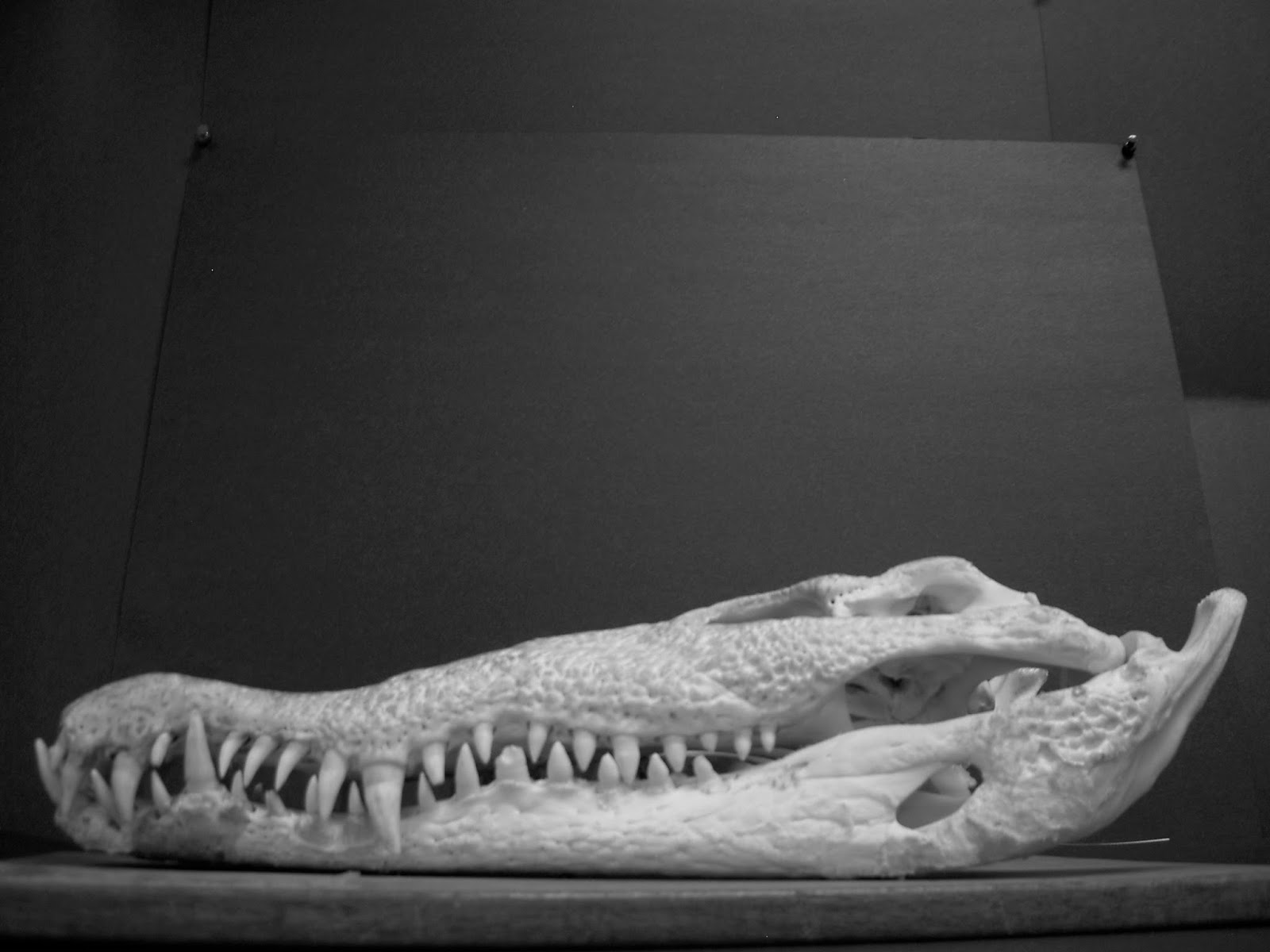
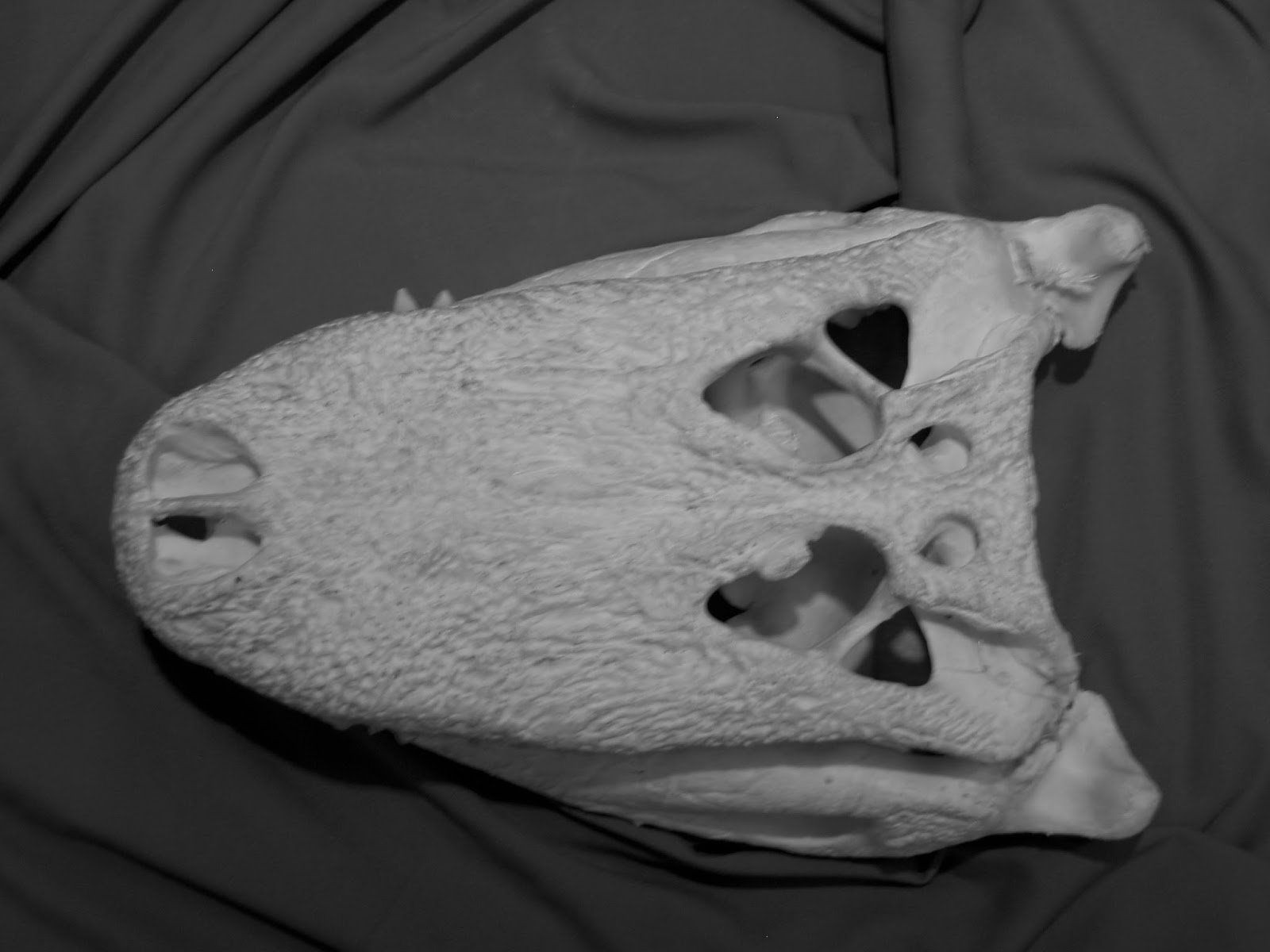
Alligators have short, wide snouts while crocodiles have slender, pointy snouts.  The other major difference is when an alligator's mouth is closed its fourth lower tooth is usually hidden, while a crocodile's fourth lower tooth is visible when its mouth is closed.  You can have your child make an alligator mouth with their hands.

Alligator Skull (fourth lower tooth hidden)

Crocodile Skull (fourth lower teeth visible)

An alligator's body is covered in scales made of keratin (the same protein that makes up our own fingernails and hair). So every time you are touching your finger nails, you are feeling what an alligator (or any reptile) feels like - smooth and dry (not slimy at all!).

Like other reptiles, alligators are cold-blooded.  They must regulate their own body temperature by either basking in the sun to warm up or moving into the cool waters to cool down.

An alligator's eyes and nostrils are located on the top of its head allowing them to sit with just those poking out of the water so they can keep the rest of their body hidden from predators or prey.  Look at different pictures of alligators and other animals to compare where their eyes are ears are located.  You can talk about the differences with your child.  For example, a rabbit's eyes are located on the side of its head letting it see almost all the way around them to keep away from predators.

Crocodilians make a variety of sounds from soft hissing to loud bellows.  Baby crocodilians will make a high pitched noise from inside the egg to let their mom (who stays with the nest) know they are ready to hatch. Using its egg tooth (a hard spot of the tip of its snout) the crocodilian will break free from the egg.  The mother will assist the hatching crocodilians by removing nesting material and then continuing to protect her young for several years.  Talk about the following questions with your child: How does a baby human let his or her parents know it needs help?  How long do humans stay with their families? How long do other reptiles stay with their mothers? In almost all cases, reptiles lay their eggs and leave them; there are some exceptions like the python.

Alligators will prey on most any animal such as insects, amphibians, birds, mammals, fish, and other reptiles. If your child is older, you can talk about food chains (an example could be plant material - insects - amphibians - raccoon - alligator).

Vocabulary

alligator
crocodile
reptile
crocodilian
turtle
lizard
tuatara
cold-blooded
warm-blooded
predator
prey
mammals
amphibians
keratin
egg

Alligator and Crocodile Vocabulary 

Coloring Sheets

Super Coloring Alligator Pages 
This site features realistic and cartoon alligators for your little ones to color.

Mom Junction's Top 25 Free Printable Alligator Coloring Pages
There is a variety of coloring pages and some activity suggestions to go along with each page.


Alligator Projects 

A is for Alligator


Alligator Craft 


Books 

Featured Shape

Have your child work on drawing a triangle this week.  If you take a look at the snout of an alligator, it closely resembles a triangle.

You can build a triangle with craft sticks, cut out scraps of construction paper in triangle shapes, look for signs around town shaped like a triangle, and examine the musical instrument. 

Activities 

My Pinterest Lessons - Letters Board. 

If you complete any of the crafts, please let me know in the comments. I would love to see them.  

Clay Play 

I purchased a tray from the Dollar Store and gathered together various materials that my children could use with the Play Doh. They created a home and food for the tiny alligator and lizard toys provided with no prompting.

The items I included this time were: a roller and cutter from a Play Doh kit, straws, buttons, plastic lids, rocks, plastic rock, toy alligators, and Play Doh.


Other A Topics 
Apples

Fun Handprint Art's Apple Counting Activity for Johnny Appleseed Day (September 26) 
This is a fun way to count apples involving paint or stamp pads.

123 Homeschool for Me's Apple Seed Counting Activity and From ABCS to ACTS's Printable Apple Seed Counting Activity  
A great activity to practice counting and if your children love dice like mine do, then this is perfect for them.

Airplanes

Play and Learn with Dana's Letter A Airplane Craft 

This is a great craft to introduce the lowercase letter a.

Homeschool Preschool's Printable Airplane Activities 
This packet has lots of fun letter A and airplane activities for your toddlers.


Resources 

Smithsonian's National Zoo and Conservation Biology Institute's American Alligator page 


Saturday, December 2, 2017

Book Club: What's the Difference Between an Alligator and a Crocodile?


This post contains affiliate links. For more information please see my Terms of Use and Disclosure Policy page. Thank you.

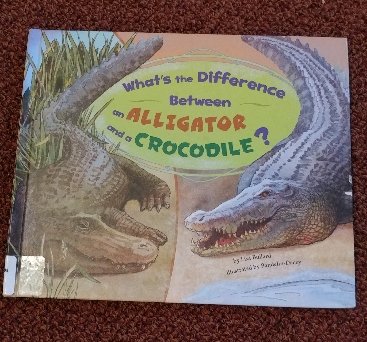
In the book What’s the difference between alligator and crocodile? by Lisa Bullard with illustrations by Bandelin-Dacey, children can learn some of the key differences between the two reptiles. 

Bullard's book provides great illustrations with an easy-to-read text sharing many facts.  It is well-organized and provides examples for each reptile on each pair of pages.  There is also a section for fun facts and a glossary at the end of the book to further your knowledge.


Vocabulary 


Free Alligator and Crocodile Vocabulary Worksheet for your children to color – words include the following:

Cold-blooded
Endangered
Mammals
Reptiles
Nostrils
Pretty
Scaly
Snout
Species
Territory
Freshwater
Saltwater
Alligator
Crocodile
Bellow

Activities


Share sounds with your children of baby alligators and crocodiles, as well as the noises that adults make

Share the following images of an alligator and crocodile skull with your children to review the physical differences of their snouts.  In the first two photographs, you can see the difference in shape and size.  The alligator's snout is wider and rounder while the crocodile's is narrower and more pointed. In the second two photographs, you can notice the bottom tooth sticking up on the crocodile's jaw.  This tooth is visible when their mouths are closed.


alligator skull
Replica Alligator Skull

crocodile skull
Replica Crocodile Skull

alligator skull
Replica Alligator Skull

crocodile skull
Replica Crocodile Skull 


Clay Play


Gather together materials to play with homemade or Play Doh.


Crafts 


These are two of the alligator themed crafts we have made at our home. 

Alligator Craft


Alligator at Magnolia Gardens in South Carolina 

Friday, November 24, 2017

Book Club: Alberto The Dancing Alligator


A Mom's Quest to Teach: Book Club: Alberto the Dancing Alligator; book cover

This post contains affiliate links. For more information please see my Terms of Use and Disclosure Policy page. Thank you.

Alberto the Dancing Alligator written by Richard Waring and illustrated by Holly Swain is the tale of Alberto and his owner, Tina. A little girl is a given a "peculiar-looking egg by her Uncle Ezra" that hatches into her pet and dancing partner, Alberto. The title is a bit misleading because the majority of the book details Alberto’s journey through the sewers and in and out of various bathrooms to find Tina.  

Vocabulary 


You can introduce or review the following words with you little one(s):

Alligator
Tango
Record
Slipped

Activities 


In the storybook, count the bathrooms, people calling the police, and the police with your children.  There are a total of 12.

picture from inside book Alberto The Dancing Alligator

Book Club: Alberto The Dancing Alligator; book cover and alligator in swamp
Practice counting to 1000 by hundreds with your children. 

Explore the tango with your children. Listen to different examples of the music. 

Discuss pet ownership and why alligators don’t make good pets. For older children, you can actually research the laws regarding ownership of reptiles. Many locations (from state to city) vary upon the regulations regarding reptiles (snakes, lizards, crocodilians, etc.).

Visit your local zoo to see alligators in person.

Read more books about alligators!

Watch videos about alligators on YouTube.


Create your own Alligator! 


A is for Alligator Craft – A simple craft to review the letter A and practice scissor skills!

alligator craft


Paint your own alligator craft. – The chance to break out paints, glue, and more to create a fun alligator puppet.

alligator craft


Fans of alligators and want to learn more? What about the difference between an alligator and a crocodile? Or do you want to a lesson on the letter A? A Mom's Quest to Teach has lots of posts to help you in your homeschooling quest! 


Part of the Homeschool Collection Posts 


Tuesday, November 21, 2017

Crafts: Alligator

Alligator craft

As a former zoo educator, I love being able to share my knowledge of animals with my children.  As we were studying the letter A, it was the perfect time to discuss alligators (and crocodiles).

In this craft, we created our own alligator.

Materials 


Steps 

1. Gather materials. (Don't forget glue and tape and any last minute things like sequins.)

paper towel rolls, green paint, paintbrushes, and other craft supplies

2. Paint the toilet paper and paper towel rolls.  Paint or color the tail.

Painting the paper towel tube green

painting the paper towel tube green

3. After the paint has dried, attach your pieces. I used a hole punch and paper fasteners to attach the rolls together.  If you have a long, thing stapler, you could attack them that way.

green paper towel tubes and green construction paper month for alligator craftgreen paper towel tubes drying


4. Glue or tape on the legs to the Popsicle sticks.

green popsicle and green construction paper for alligator legs and feet

green popsicle and green construction paper for alligator legs and feet

5. Glue the eyes and the teeth to the head.

Taping or gluing white construction paper triangles to green construction paper alligator craft head


6. Add last minute color touches with the markers to create scales. Color and attach the tale. If you have sequins, you can add those for scales, too.

attaching sequins to green paper towel rolls for alligator craft

7.  Attach the legs.  I taped them to the inside and the outside of the alligator.  If you have more time, you can glue them.

attaching legs to green paper towel tubes for alligator craft


8. Play with your alligators.

children playing with green alligator craft

For a more realistic look, keep the top of the alligator a greenish-black color and the bottom a cream-white color.  This coloration helps the alligators camouflage themselves from birds above them in the sky, because they blend in with the water, and from fish below by blending in with the sky.

alligator in swamp in Charleston SC
Here you can see how the dark coloration of the top of the alligator lets them blend in with the swampy water.


Other Alligator Resources and Activities

Books

Zack's Alligator by Shirley Mozelle with pictures by James Watt
Zack's Alligator Goes to School by Shirley Mozelle with pictures by James Watt
What's the Difference Between an Alligator and a Crocodile? by Lisa Bullard with illustrations by Bandelin-Dacey
Alberto the Dancing Alligator by Richard Waring with illustrations by Holly Swain

Crafts 

A is for Alligator 
a for alligator craft


Clay Play 
misc playdough materials
Materials for clay play like toy alligators, pipe cleaners, rocks, etc. 

alligator craft


Tuesday, August 2, 2016

Crafts: A is for Alligator

Letter A craft of an alligator face

This post contains affiliate links. For more information please see my Terms of Use and Disclosure Policy page. Thank you.

During the month of July, I started focusing on 'teaching' my 3 year old.  We focused on the letters A, B, and C as well as the numbers 0, and 1 along with some other topics.

One of the crafts we completed together was an alligator in the shape of the letter A.

Materials 

  • googly eyes
  • construction paper
  • glue 
  • crayons 
  • scissors 

I pre-cut the letter A out of green construction paper and while he was coloring, I cut out teeth and scales for him to glue onto his creation.


Coloring the letter A in the shape of an alligator

I think his favorite part of the whole project was attaching all the pieces.  He just loves working with glue. 


Do your children have favorite way to learn the letters of the alphabet? Or perhaps a favorite type of reptile? We love alligators and crocodiles in this house!

Resources 

Some alligator toys and books for your little ones.  We personally do not have the Schleich Alligator or VTech Go! Go! Smart Alligator but we have many other items from both companies and love them.

And I LOVE An Extraordinary Egg.  It is one of my favorite books for preschool-kindergarten age children.


I linked up with the following blog(s):