Showing posts with label kids educational games. Show all posts

Wednesday, January 3, 2024

Dice, Decks, and Boards: Dragon's Breath

A Mom's Quest to Teach logo: Dice, Decks, and Boards: Dragon's Breath; dragon clip art

This post contains affiliate links. Please see my Terms of Use and Disclosure Policy page for more information. Thank you.

Who doesn't love sparkling gems? In Dragon's Breath, children will collect gems that are released from the ice ring to add to their dragon hoard. 

Dragon's Breath from Haba® is for 2 to 4 players aged 5+. The game only takes about 15 minutes to play and set up, which means you can play over and over again in one gaming session. Since each game is so short, Dragon's Breath is also excellent for large families because you can swap out players. 

What Do You Get? 

The game comes in a sturdy box and contains the following: 

  • 4 Dragon Children 
  • 9 Ice Rings 
  • 1 Ice Floe Tile 
  • 90 Sparkling Stones (18 in each of 5 colors) 
  • 1 Dragon Dad 
  • 1 Box Base with 4 Dividers 
  • 1 Game Board 
  • 5 Sparkling Stone Tiles 

A Mom's Quest to Teach: Dice, Decks, and Boards: Dragon's Breath; cover of Dragon's Breath box


How Do You Play Dragon's Breath? 

Place the game board on the box base with the four dividers set up. Place the ice floe tile in the middle. 

Depending on how many players there are, you stack either 8 ice rings (2 or 4 players) or 9 ice rings (3 players) on the ice floe tile. This creates a column of ice that the dragon dad will "melt." 

Each player selects their dragon child and puts the marker in one of the four corners. 

All the sparkling stones are placed in the ice column. Any that fall, go into the holes in the base. The Dragon Dad and the sparkling stone tiles are set to the side for gameplay. 

Once play begins, each round is the same: 

  1. Select a sparkling stone tile so you know which color you will collect. 
  2. Lift an ice ring. The sparkling gems will fall (if they fall in a hole, they belong to Dragon Dad). 
  3. Divide up the gems based on the stone tiles. Any left after you divide them go into Dragon Dad's hoard. 
There are variations of the game listed in the instruction manual. 

Dragon's Breath game set up; A Mom's Quest to Teach


Our Thoughts 


This is a high-quality game made for repeated play by small children. It is playable by four-year-olds and up (supervision of littler ones is necessary). It teaches patience, colors, and counting, as well as good sportsmanship. 

Dragon's Breath pieces; Dragon Dad


How Can You Use This Game Elsewhere in Your Homeschool? 


  • Use the game for sorting colors. 
  • Spelling words: Use the ice round ice rings and gently toss them onto an alphabet board. Then, spell out a word that starts with that letter. 
  • Trading and finances. Make each color represent a different amount and practice basic trading and bartering with the gems. 
  • Work on learning Roman Numerals. Make the colors represent different numbers and then count out with math problems. 
Red = 1 = I 
Blue = 5 = V
Orange = 10 = X
Purple = 20 = XX 
Green = 50 = L 

Can you think of any other ways to use the game in your homeschool? 


Thursday, August 25, 2022

Dice, Decks, and Boards: Challenge Your Mind With Horse Academy

 A Mom's Quest to Teach: Dice, Decks, and Boards: Challenge Your Mind With Horse Academy; horse photograph in the background

I received a COMPLIMENTARY copy of this game from Timberdoodle in exchange for my honest opinion. I was not required to write a positive review, nor was I compensated in any other way. This post contains affiliate links. For more information, please see my Terms of Use and Disclosure Policy page. Thank you.

Games are a great way to challenge your mind. There are many ways you can keep different skills fresh no matter what kind of game you are playing. Games help us: 

  • Build critical thinking skills
  • Practice cooperation, collaboration, and learning to win or lose with grace 
  • Keep reading and/or math skills in use
  • Use logic
  • Practice problem solving 
  • Work on planning
  • And more! 
Some games are better equipped to help you and your children work on these skills and ideas than others. For example, while the popular -opoly games may help us learn and practice how to lose graciously, games like Horse Academy can help build cognitive skills like spatial insight, planning, and problem-solving. As it is a one-player game, it can also help with patience if there is more than one who wants to work on the challenge at one time.


A Mom's Quest to Teach logo; Horse Academy box and game in session


What is Horse Academy? 


Horse Academy is a one-person puzzle game from Smart Games where players need to create a path for their horse to jump over obstacles in a specific sequence to reach the exit gate. The box contains
  • 1 game board 
  • 1 exit gate 
  • 10 puzzle pieces with obstacles and paths
  • 1 horse with a rider
  • Booklet with 80 challenges
  • 1 sticker sheet with instructions on where to download timesheets 
There are five levels of challenges: 
  • Starter
  • Junior 
  • Expert
  • Master
  • Wizard 
You look at the challenge to pick out the pieces you need and find out where to place the start and finish pieces (except at the wizard level where they don't tell you the starter or end position). Your horse follows the path in the order laid out in the challenge without changing course. There are some additional specifications regarding turning, order, and color in the booklet. 


A Mom's Quest to Teach logo; challenge book and game in session for Horse Academy


Our Thoughts on Horse Academy 


At first, I was a bit confused, but I found once we started trying to solve the challenges, it was easy to get the knack of this one-person puzzle game. I did not give our daughter too much instruction once she got started. We ran through a couple of the challenges together, and then I went to help her brother with another one-person puzzle game from Timberdoodle that he is helping us review.

When I asked our daughter what she thought of this challenging puzzle game, she told me that it would help people learn about horses. She said, "the puzzles are not difficult. They are fun. They are not too hard." She also gave the advice that "you have to stay on the road. Make your horse jump over the fences. Some paths are wriggly and shaky. Like challenge number 10."


A Mom's Quest to Teach; Horse Academy game in session


I really liked how she took quickly to Horse Academy and worked through the challenges without even realizing she was using critical thinking skills. Her mind was being challenged but she did not know it. She just saw it as having fun. 

The pieces are hard plastic and fit well together on the game board. It all fits neatly in the box too which is wonderful for storage and organization. I really appreciate games that go back into the box easily. 

As a homeschooling mom of two elementary-aged children, I like having one-person games that focus on cognitive skills. While working with her brother, our daughter can have fun while building her critical thinking skills. 

I would recommend Horse Academy to families of both homeschooled and non-homeschooled children. It is a great game for those times when a child needs to amuse themselves. It is part of the 2022 Third-Grade Curriculum Kit at Timberdoodle which seems like a perfect fit to me. Our daughter is going to be in second grade and while she can do the easier challenges, I think the higher-level ones will be a bit too challenging without help. 


A Mom's Quest to Teach: Dice, Decks, and Boards: Challenge Your Mind With Horse Academy; game in session with challenge book visible


Interested in More Products from Timberdoodle 


Wednesday, July 28, 2021

Building Critical Thinking Skills with Games

 A Mom's Quest to Teach: Building Critical Thinking Skills with Games: A Review of Battle Sheep with game board in background

I received a COMPLIMENTARY copy of Battle Sheep from Timberdoodle in exchange for my honest opinion. I was not required to write a positive review, nor was I compensated in any other way. This post contains tracking links. For more information, please see my Terms of Use and Disclosure Policy page. Thank you.

Building critical thinking skills is very important. As parents and homeschoolers, we want our children to be able to think through things critically, be able to access and understand a variety of reading materials, and be able to solve problems on their own. 

There are many ways we can help our children develop their ability to think critically. We want them to practice: 

  • Observation skills 
  • Analytical skills
  • Inference skills 
  • Problem-solving skills 
  • Communication skills or applying what they learn as they think critically 
One of our favorite ways to encourage critical thinking is through games like Battle Sheep. This fun, easy-to-learn (but difficult-to-master) game is part of the Third Grade Timberdoodle Curriculum Kit. We were blessed with the opportunity to review it in our homeschool and Battle Sheep has quickly become a hit with our younger son. 


A Mom's Quest to Teach: Building Critical Thinking Skills with Games: A Review of Battle Sheep with inside of game box and game pieces


What is Battle Sheep? 


"Battle Sheep: Flock to Greener Pastures" is a Blue Orange game for two to four players of ages 7 to adult. Players are in charge of a sheep stack, and they attempt, through play, to gain control of all Farmer Pat's pastures. Before play starts, they create the board by placing each of their four pasture boards. Each hexagon on the pasture board represents one pasture, and each pasture board contains four hexagons (resulting in four pastures per pasture board piece).

Once all the pasture boards have been placed, players pick their starting point to place their stack of 16 sheep. From this point, each player moves their sheep to attempt to take over the pasture lands. When moving sheep, the stack is split into two stacks. Each stack must contain at least one sheep. The original stack stays in place, and the new stack moves as far as it can in a straight line. 

It is in the moving of the stacks of sheep where players need to use critical thinking skills. As you want to have the most sheep on each pasture board, it is important to spread your sheep throughout the game board. It is also important not to allow your sheep stack to be blocked by yourself or the other players. As you cannot jump over or combine stacks, you want to make sure you have many straight lines available for movement. 

A Mom's Quest to Teach: Building Critical Thinking Skills with Games: A Review of Battle Sheep with game box


What is in the Box? 


Battle Sheep has everything you need to play packed into a sturdy box. The 64 sheep chips (16 of each color - blue, white, black, and red) and 16 heavy, cardboard pasture tiles. Everyone in our family was impressed by the quality of the materials. In fact, our 18-year-old said, "wow, these chips are high quality." When you are done playing, everything fits neatly back in the box. 

A Mom's Quest to Teach: Building Critical Thinking Skills with Games: A Review of Battle Sheep with sheep tiles for Battle Sheep


A Mom's Quest to Teach: Building Critical Thinking Skills with Games: A Review of Battle Sheep with pasture tiles for Battle Sheep


Building Critical Thinking Skills 

The first time we played, it was just my husband, our eight-year-old son, and myself. We worked through the instructions, looked at the back of the box to see what a game in progress looks like, and then dove in for our first play through. There were a few instances where we needed to consult the rules again, but, in general, I found Battle Sheep easy to figure out. Personally, I jumped right into our first game without putting too much thought into where I wanted to start my sheep stack. This was a mistake, I quickly discovered. Players really need to think in advance of their steps to ensure that they are able to move their sheep in multiple ways. 

After our first game, our son said, "I already know how I want to play the game differently next time." I love the fact that he was thinking through the current game and building a strategy for future games, too. To me, this means that Battle Sheep is not just a game that one plays, enjoys, and then puts back on the shelf. It is a game that builds critical thinking skills. Battle Sheep helps one think differently about gameplay and how to implement different strategies. 

A Mom's Quest to Teach: Building Critical Thinking Skills with Games: A Review of Battle Sheep with two photos of game play


In addition to building critical thinking skills, Battle Sheep can also help foster healthy competition. After all, one person is going to win. Teaching our children how to be gracious winners and accept losses is important to our family. Battle Sheep can help in this area, too. As the game only takes about 15 minutes (or as long as everyone takes planning out their moves), you can play it multiple times in one sitting. Playing it over and over in a short amount of time helps work through new ideas for gaining more pasture land.

I think we would all recommend Battle Sheep. The recommended starting age of seven seems to be right on target. I think it would be a welcome addition to many a homeschool's game shelves. Our son said it is his new favorite game, and he has asked to play it on a regular basis. This makes Battle Sheep a win for our homeschooling family! 

If you are looking for another game from Blue Orange, you might want to give Gobblet Gobblers a try! 

Thursday, February 25, 2021

Finding the Perfect Indoor Game for your Homeschool

A Mom's Quest to Teach logo: Dice, Decks, and Boards; Finding the Perfect Indoor Game for your Homeschool; dice

This post contains affiliate links. For more information, please see my Terms of Use and Disclosure Policy page. Thank you.

There are so many great game choices for your homeschool that can be both fun and educational for your children and your entire family. Our family has quite a few that rank high among our favorites, including ones that require very little setup, ones that are cooperative, and ones that let us roll dice. With board games and tabletop games in general gaining in popularity over the years, you can find them sold at a variety of stores – both offline and online – like chain stores or your friendly local gaming store. I would always recommend you go to your local gaming store first when looking to purchase a new game. They might even be able to find the one you have been searching for through their buying power. 

Games for Toddlers 

It seems like there are a lot better games available for younger children now than when I was a child. I seem to recall games based upon Snow White, Care Bears, or E.T., but I cannot remember how they were played at all. The games we have purchased for our younger children or those they were gifted seem to be a huge step above those of my youth. 

We have many cooperative games (which our daughter loves because everyone wins or everyone loses), such as Mermaid Island, Noah's Animal Rescue, The Fairy Game, and others. These are wonderful for teaching children how to work together as a team and prevent tears when someone loses. Of course, our five-year-old daughter has been known to cry when she wins a cooperative game. 

Several card games that are educational and fun for toddlers include Raccoon Rumpus and Koala Capers. I love how these two games are random-based upon dice, so you don't really have to have a lot of skill to win or lose. I also like that they focus on colors and patterns – perfect learning opportunities for little ones.


A Mom's Quest to Teach logo; blue pieces from Catan Junior; Dragon breath dragon and gems; Finding the Perfect Indoor Game for your Homeschool


Educational Board Games 

As our children get older, there are a variety of educational board games that we can incorporate into our homeschool day, such as those from Byron's Games that we have received for free to review. Our children really like Continent Race, which focuses upon learning the continents, countries, and flags. Math Sprint is also great fun because it not only includes reviewing math facts but also allows the children to do physical activities, like jumping jacks and jogging in place.

Costa Rica, Peru, and other flag cards from Continent Race game


Games with Lots of Components 

I must admit that I love games with lots of stuff! Even though the extra items might also bring more difficulty to learn the game, I love opening the box and finding cards, dice, and other game pieces. Our son received a fun game for Christmas called Dragon's Breath. There are lots of little 'jewels' that your dragon wants to collect. For young children, they are so pretty! 

We picked up Dungeon Drop for our family game night because we enjoy role playing games with Dungeons, so why not create our own with this game? There are all these tiny little cubes that you drop to create the dungeon that represent pillars, monsters, and treasure. Because you drop them onto the table, each game is different from the next. It is a very neat concept that keeps the game fresh and new. 

Another game that my husband picked up is the Quarriors Dice Building Game. It has 130 custom dice and over 50 cards for gameplay. We have only tried playing it once because it is still a bit too advanced for our entire family to be able to enjoy it together, but I just love all the dice! 

Quarriors game box


Role-Playing Games 

My husband and my stepson have been gamers for longer than I have known either of them. My husband's journey with Dungeons and Dragons began when he was in elementary school. He has since gone on to play a variety of editions, versions, "retroclones" (which hearken back to the first three or four versions of Dungeons and Dragons games from the 1970s and early 1980s), and games of several genres. It took a few years for my husband to convince me to play, and now I have lots of pretty dice.

The wonderful thing about role-playing games is that you don't have to play ones that involve dragons or wizards. There are ones that are set in generic outer space or even the Star Wars or Star Trek universes. My husband bought me one set in the 1920s knowing I enjoy that era of history. There are versions geared towards children, too. 

Another benefit to playing role-playing games is the community of players. There are so many different groups out there – some of which may or may not be for you. You can play online through Zoom calls or other apps, watch others play online as they get together via long distance, or roll up a character gathered around the dining room table. And because the entire game requires your imagination and critical thinking skills, there really is no wrong way to play.  Yes, there are rules, but RPGs will help you think outside the box and make great stories with your friends. 

The Perfect Indoor Game 

Just what is the perfect indoor game for your homeschool? I think any game that brings you together with your family and friends – whether via technology or together in one room – is the perfect indoor game. That game may take 15 to 20 minutes, or it may take hours, days, or a lifetime if you are role-playing. There are so many great options available for families, and playing games can teach so many important skills.  

Tuesday, October 27, 2020

Dice, Decks, and Boards: Math Sprint – The Mental Math Game

Text: Dice, Decks, and Boards: Math Sprint – The Mental Math Game; cover of board game; logo of A Mom's Quest to Teach

Disclaimer: I received a FREE copy of this product through the HOMESCHOOL REVIEW CREW in exchange for my honest review. I was not required to write a positive review, nor was I compensated in any other way.

We love playing games in our house, and those games that also help our children with their homeschooling and education have a special place on our shelves. If you are looking for a fun and educational way for your children to review their math skills, then you should definitely check out the latest game from Byron's Games. Math Sprint – The Mental Math Game has been a welcome addition to our game-schooling time as everyone in our family joins in to answer questions on one of the over 250 cards. 

Reviewing Math Sprint from Byron's Games has been so much fun with our children. Several nights, after dinner, we brought out the game to test our addition and subtraction skills. There are multiplication and division questions and word problems, but we used only those cards with addition and subtraction as we have a kindergartner, second-grader, and senior. If our children were older, we would have used all the cards provided. 

Recommend for ages 7+ --- 2 to 8 players --- 30 minutes of gameplay 


cover of Math Sprint game box


And Just What Do You Get in Your Bright Blue Box? 


  • Instructions 
  • One running track board (for gameplay) 
  • 258 Cards: These are divided into the following categories  
    • 92 addition and subtraction cards 
    • 106 multiplication and division cards 
    • 30 wild cards 
    • 30 challenge cards 
  • 10 dry erase cards (so you can make up your own questions) 
  • One dry erase marker 
  • 8 Runner playing pieces in 8 different colors (there are character names and pictures on the instruction sheet) 


Text: Dice, Decks, and Boards: Math Sprint – The Mental Math Game; Practice your mental math skills as you race around the board; image of cards & board game


How Do You Play Math Sprint? 


Math Spring allows you to be very flexible in game play based upon the ages and levels of the children playing the game. The objective of the game is to get to the finish line by answering the mental math questions correctly. You can include both the addition/subtraction cards and the multiplication/division cards or just one stack. (We only included the addition/subtraction cards. We did not use all of the wild cards and used none of the challenge cards when we played.) 

After you pick your playing piece – do you want to be Crystal Reaction, Bootstrap Byron, or one of the other characters – you put your runner in one of the lanes on the track labeled 1 to 8. There are three different lengths of gameplay available to you and your homeschooled children. You can run a 100m, 200m, or 400m game. The longer distances are better for advanced players or for after you have played Math Sprint several times. 

board game of Math Sprint

The first time we played, I misread the rules, and we only moved the runner forward one space after answering a question correctly. We fixed that error the next time we played, which made the game faster and more enjoyable for our five-year-old daughter. We liked the wild cards that allowed our runners to move forward additional spaces without having to answer mathematics questions.  

Each time we have played the game, we only raced the 100m dash, but both our younger children enjoy doing the ten jumping jacks as they get to the half-way point on the track. If we were playing the 200m dash, they would have five hops and ten arm circles to incorporate into the game. And if we were to play the 400m dash, the game incorporates balancing on one leg for five seconds, jogging in place for fifteen seconds, and ten torso twists. So even though children are not really running around a track, they are still getting their exercise!


examining the cards of Math Sprint and the board game


How Did We Use Math Sprint in Our Homeschool? 


We played the game after dinner time so that everyone – my husband, our homeschooled high school senior, our seven-year-old son, our five-year-old daughter, and myself – could play. Our family enjoyed that the "Coach" got to choose who would answer the question – everyone or just two runners. We quickly learned that our youngest son liked to try to have everyone even in the race. 

As our younger children get older, I can easily see us allowing them to play Math Sprint during our homeschool day to refresh their addition, subtraction, multiplication, and division skills. I think being able to answer these simple math questions quickly is important to their success in more difficult levels of mathematics.


Runners on Math Sprint board game


What Do We Think? 


I really like the quality of the game board and the cards. I can foresee them lasting through lots of gameplay with our homeschooling family. Math Sprint – The Mental Math Game is the perfect addition to our collection of educational and fun games for family game night. I also appreciate the fact that while there is a competition aspect to the game, it also allows children to work on individual skills to improve their mental math skills. 

Our seven-year-old son said that, while you are playing the game, if you don't know the answer to a question, you can learn it when one of your fellow gamers answers it correctly. So, you are learning even if you don't get to move your runner forward in the game. His favorite cards are the wild cards such as "you got distracted thinking about a new video game. Go back 1 space."

My husband said that he enjoyed having another reason for the family to gather and have fun at the table, all the while helping the littler ones learn. While parents can easily beat children in the game, it was fun to "lay off" and let the children "steal" answers and gain confidence in mathematics.

As I really like the concept of answering questions as your player moves around the racetrack, I would love to see Byron's Games introduce add-ons to Math Sprint. They could develop card packs with questions about language arts, social studies, history, science, and more. I think our family would definitely purchase additional card decks if it meant we could gameschool on more evenings together!

I think Math Sprint – The Mental Math Game would make a wonderful addition to your gaming shelves. It is both fun and educational. The gameplay is very easy to adapt to the level of your children as you can play a longer game as well as add in additional questions. 


Do You Want to Learn More? 


Bryon's Games logo

We had the privilege of reviewing another game from Byron's Games earlier in the year (March 2020) - Continent Race. We had so much fun with this game, too! 

WebsiteFacebook – Instagram 

Don't forget to read how other members of the Homeschool Review Crew played Math Sprint – The Mental Math Game in their homeschool! 

Click here for more Homeschool Review Crew reviews logo


Wednesday, August 26, 2020

Dice, Decks, and Boards: Zig Zag Puzzler Review

Text: Dice, Decks, and Boards: Zig Zag Puzzler Review; logo of A Mom's Quest to Teach; Zig Zag Puzzler

I received a FREE copy of this game from the Timberdoodle in exchange for my honest opinion. I was not required to write a positive review nor was I compensated in any other way. This post contains affiliate links. For more information, please see my Terms of Use and Disclosure Policy page. Thank you.


Zig Zag Puzzler game from Smart Games

Travel-friendly games are fantastic – especially for homeschooling families. If you need to go from one co-op locale or appointment to another but still want to keep your children's minds active, Zig Zag Puzzler may be an excellent addition to your game shelves. This puzzle which encourages improvement in concentration, memory, fine motor skills, and more is part of the 9th grade Timberdoodle Curriculum kit

There are two modes you can play using the two full-color manuals which give you and your children 80 different challenges. Everything fits neatly into the package which means you can easily store and transport the Zig Zag Puzzler.


Text: Dice, Decks, and Boards: Zig Zag Puzzler: A one-person puzzle game with only one solution for each challenge; 2D & 3D puzzle

What Is Included? 


Along with a lidded container, you will receive nine colorful, geometric shapes to complete the puzzles, one manual with 40 2-D challenges, and one manual with 40 3-D challenges. The container itself doubles as the playing boards on which you place the geometric shapes.

How Did We Use the Zig Zag Puzzler in Our Homeschool? 


The two manuals present 40 challenges for stacking the geometric shapes in 2-D patterns and 3-D patterns depending upon which side of the playing board you use. The little booklets progress in difficulty providing the person puzzling out the solution with fewer and fewer pieces placed on the board. Your goal, after you follow the initial set up in the manual, is to place the remaining pieces.  

After we received the Zig Zag Puzzler, I set out to put together one of the puzzles so that I could easily put away the game. It did take me quite a bit to work through the puzzle but I am the first to admit that my mind does not work through logic puzzles like this as easily as other logic games and questions. 

A few nights after dinner, I asked our soon-to-be senior to take a look at the Zig Zag Puzzler. Once he got the hang of what was required, he skipped to the harder puzzles. He moved all the way to puzzle 40 in the 2-D manual. It did take him quite a while and I ended up having to provide some tips and suggestions but eventually, he placed all the geometric shapes correctly. 


four photos showing steps and solution booklet for Zig Zag Puzzler
Working on the late challenge for the 2D puzzles - at the Wizard level.

What Did We Think? 


While only our teen and myself have played with the game, both our younger children are eager to try their hand at it. I think that the recommendation on Timberdoodle of ages 12 and up is perfect. I do not think that those younger would be very successful unless they already are familiar with this type of puzzle or game. 

While our teen was getting frustrated, he was determined to finish the most difficult 2-D puzzle. I think that the Zig Zag Puzzler will be great for him to help him fine-tune his memory and concentration skills. He spends a lot of time playing video games and being on the computer, so I like the idea of him working on puzzles using his hands.

I really like the quality of the container, the pieces, and the manual. It should last for quite a while of traveling from one location to another. I also like that the Zig Zag Puzzler is a one-person game. This makes it perfect for those moments when you need to work with one or another of your homeschooled children and your older child finishes up early. They can still be engaged in something educational but have fun.

Showing Zig Zag Puzzler solution - ready to put away

I would recommend Zig Zag Puzzler for junior high and high school students, their parents, and even their grandparents. Completing the puzzles will help one keep their mind young. With everything self-contained, you won't have to worry about where you put the pieces at the end of each play session.

Timberdoodle Blog Team logo


Do You Want to Read More Timberdoodle Reviews? 


Are you looking for more educational games? Bugzzle is a game for younger children that will help them work on their logic skills and Gobblet Gobblers will help elementary-aged children work on strategy building skills. 


Saturday, August 8, 2020

Dice, Decks, and Boards: Gobblet Gobblers

Text: Dice, Decks, and Boards: Gobblet Gobblers; logo of A Mom's Quest to Teach; background of tic-tac-toe board

I received a FREE copy of this game from Timberdoodle in exchange for my honest opinion. I was not required to write a positive review nor was I compensated in any other way. For more information, please see my Terms of Use and Disclosure Policy page. Thank you.

Games are a fantastic way to take a break from the homeschooling day while still keeping the kids' brains active. We have found quite a few fun and educational games from Timberdoodle to add to our game closet. The curriculum kits at Timberdoodle often include a number of games to help children practice their critical thinking skills. One such game is Gobblet Gobblers which is part of the 2020 Kindergarten Grade Curriculum Kit.  


Gobblet Gobblers game box

What is Gobblet Gobblers? 


Gobbler Gobblers is a game produced by Blue Orange Games for ages 5 and up. As it is a spin on the popular Tic-Tac-Toe game, it is meant for only two players. The box contains everything you need to play the game including: 

  • 1 grid (four plastic pieces that you snap together) 
  • 12 Gobblers of three different sizes and two colors 
  • Illustrated game rules 
Gobblet Gobblers game rules

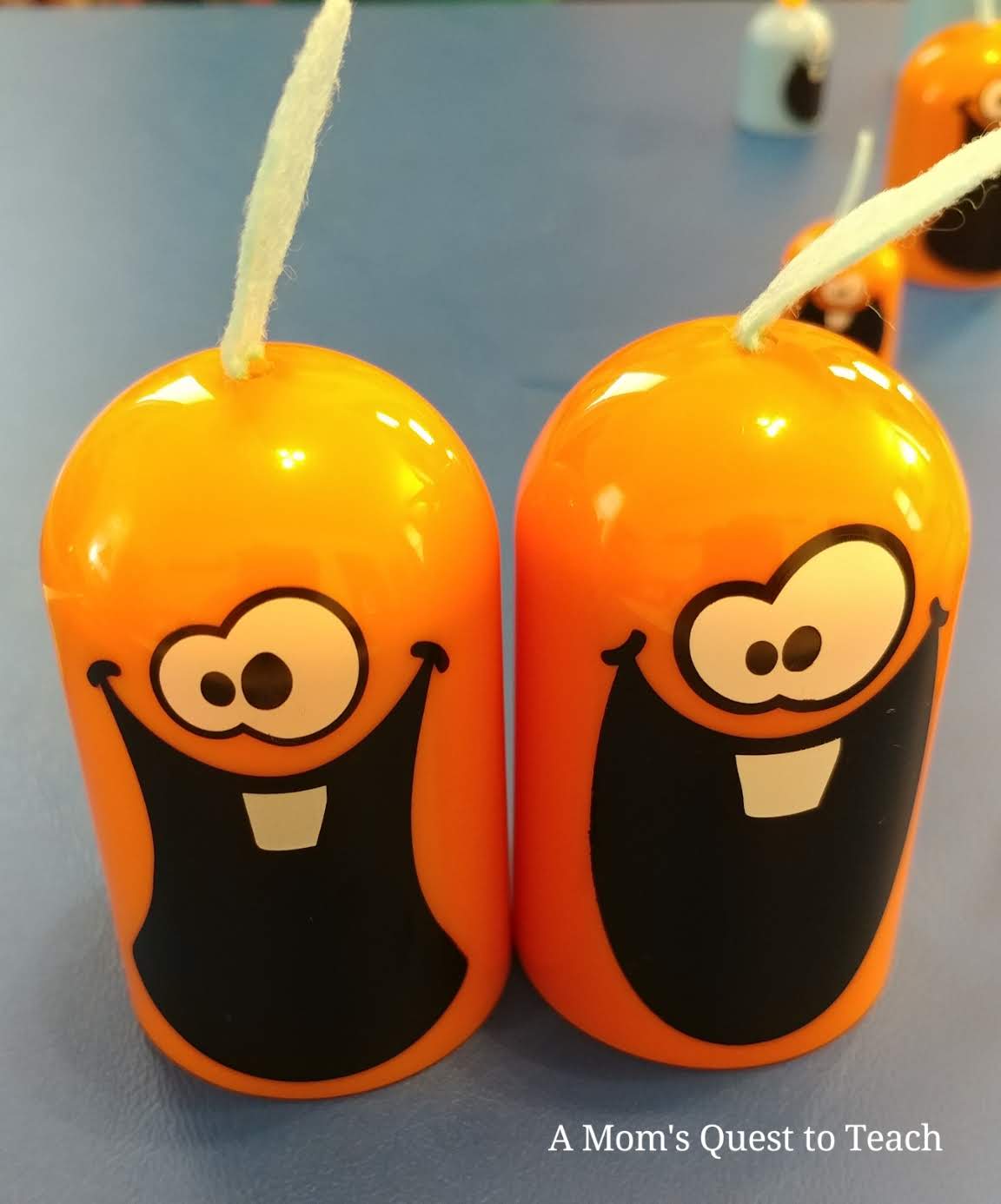
The Gobblers have a felt tip sticking off their head and fun, silly faces. You and your opponent can start playing your first game using typical Tic-Tac-Toe strategies but you will quickly incorporate new strategies. In order to win the game, you will want to be the first to line up three Gobblers in a row but your opponent can stop you in a number of ways.

Gobblet Gobblers two orange large pieces


When you are trying to block your opponent from getting three in a row, you can simply place your Gobbler in a space OR you can put your Gobbler over a smaller one. You can even move your Gobbler that is already on the board to cover up a smaller Gobbler or into a new, empty space. 

Why Is Gobblet Gobblers a Good Game? 

Text: Dice, Decks, and Boards: Gobblet Gobblers; A fun game that requires critical thinking and can be played in 5 minutes. photos of Gobblet Gobblers game box and pieces from game; logo of A Mom's Quest to Teach; Timberdoodle Blog Team logo

When playing Tic-Tac-Toe, children will quickly learn how to beat the game or at least force a tie very early on. When playing Gobblet Gobblers, children will need to think about their moves more carefully as there are many more choices available to help them win. The illustrated game rules provide some very useful tips: 

  • Don't hesitate to gobble up your own pieces. 
  • Before you move a piece, try to remember what is under it. (Once you touch a piece you need to move it and you may be revealing your opponent's winning move.) 
  • Think ahead 
As Gobblet Gobblers is a fast game, it is the perfect one to bring out in the middle of your homeschooling day to help build critical thinking skills with your children. It is also a great game to introduce strategy to your children in gaming.


6 Gobblet Gobblers pieces

How Did We Use Gobblet Gobblers? 


When the game first arrived to review, our younger children and I took turns playing it one afternoon before dinner. Our younger son and I played quite a few games (usually with me winning). It didn't take him long before he started to incorporate some new strategies into his game play. He was more likely to cover up game pieces with his Gobblers than I was when we were playing – leading to some close calls. My husband also played the game with our younger son. He enjoyed drawing out strategies from our son and encouraging him to counter my husband's moves (which paid off when our two boys played). Finally, our two sons played many games after dinner one evening. Both our younger son (aged 7) and our teen had a great time and enjoyed Gobblet Gobblers. Our teen agreed that it is a fun game and does require a lot forethought and planning in order to win a game. He enjoyed it when his few mistakes were quickly exploited by his younger brother, leading to the younger's victory.

I found Gobblet Gobblers the perfect game to take out for a quick break from homeschooling with books and online resources. We could play one or two games and easily pack it away or we could play a tournament and play a great number of rounds.

Gobblet Gobblers game in progress

Gobblet Gobblers game in progress


You can keep the game in the original packaging – putting back the pieces into the green plastic tray or you can put everything into a plastic bag so you can take the game on-the-go. As it requires very little set-up, you could easily bring it with you to a restaurant, grandma's house, or the doctor's office.


Gobblet Gobblers packaging


I think Gobblet Gobblers would be a great addition to your gameschooling shelves! It will help your kindergartener work on memory, visual perception, problem-solving, and help them focus on the task at hand. While it is included in the kindergarten kit, you can very easily play it with children who are older, too. And with each game only taking a few minutes, everyone in your family can enjoy Gobblet Gobblers on game night.

Interested in other Timberdoodle reviews? We've reviewed Tenzi Dice, Bugzzle, and more! 

Timbderdoodle Blog Team logo


Monday, March 16, 2020

Learning Geography Through a Fun Game: Review of Continent Race

Text: Learning Geography Through a Fun Game: Review of Continent Race; Bryon's Game logo; A Mom's Quest to Teach Logo; cover of Continent Race

Disclaimer: I received a FREE copy of this product through the HOMESCHOOL REVIEW CREW in exchange for my honest review. I was not required to write a positive review nor was I compensated in any other way.

For the past several weeks we have had the fun of playing and reviewing a geography-based game produced by Bryon's Games. Continent Race is created with children ages 7 and up in mind but our entire family (ages 4 and up) had a lot of fun playing it and learning about the world. There are multiple ways to play the game per the game card rules (a basic level of play and an advanced level of play with additional options) which made adapting it easy for our homeschooling family.

Box of Continent Race

About the Game


So what do you get when you purchase Continent Race? The box contains:

  • 5 Continent Lists with Maps
Five Continent Cards from Continent Race

  • 1 World Map (which is much like a game board because it folds and fits into the box) 
Continent Race map

  • 205 Country (Flag) Cards
Continent Race cards

  • 3 Antarctica Wild Cards
  • 1 Game Rules Card 
Continent Race is recommended for ages 7 and up and each game is approximately 30 minutes in length. The object of the game is to be the first player to collect the required number of country cards from the continents. So, one would need to collect two cards from Australia/Oceania and four cards each from Africa, Asia, the Americas (North and South combined into one area for the game's purposes), and Europe in order to win. However, in the basic level of play, one would only need to collect the necessary cards from 3 continents to win. In advanced play, players need to collect all the required cards and one could add in two additional options: mystery cards and challenges. The mystery cards are ones that do not have the color of their continent on it. For example, the country of Denmark is not blue like the other European nations so players must look on the world map or the Continent Lists to be able to correctly identify to which continent it belongs if they don't already know. 

Continent Race Game Card: Denmark


If one is using the challenge feature, players can challenge another player when they draw a card with a C on it to look over the Continent List for 15 seconds and then name off as many countries as they can. The two players take turns naming as many countries as they can until one player can no longer name any countries. The winner gets to draw 3 additional cards from the draw pile and keep the most useful (discarding 3 cards afterwards).

Continent Race game cards


The Game Rules Card offers additional information and answers some questions you may have, such as why are their only five continents (Europe, Asia, Africa, The Americas, Australia/Oceania) represented. It was determined that Antarctica would be too easy and North and South America were combined as North America contains so few nations. Overall, the idea was that Bryon wanted to represent the five Olympic rings. 

Continent Race Game play; text: Continent Race features the national flags of countries throughout the world"

How Did Our Family Use the Game in Our Homeschool?


We modified Continent Race a bit to fit the needs of our homeschooling family. We required players to try and say the name of the countries when they put down the cards to fill the continents. We did not require winners to call out and locate the countries on the map as is one of the requirements on the game card to win. We will be incorporating this rule as our children get older as it is an important part of using the game to help reinforce geography.

We found that as more players started putting down groups that more and more people were able to collect the necessary cards to complete continents. This meant the end of the game moved much more quickly than the beginning of the game.

Continent Race cards
Working towards collecting all of the necessary cards to win!


We shuffled in the Orange Mystery Cards after we had played the game several times. I am not sure why but I had trouble keeping those orange cards separated and set as different in my mind. I kept thinking they were either a new continent or part of the Americas.

We have not used the scorecard yet that is provided on the site but our first grader was very excited to see that they offer one. Plus you can download and print the flags to color!

Continent Race game play
Pictures from one of our many games

What Did We Think?


Our family really enjoys all types of games – from those that are just for pure fun and entertainment to those that are educational like Continent Race. We play games all the time in our house and homeschool. In fact, I would like to spend more time playing games as a family.

From the very opening of the box, I really liked the way that Continent Race looked. The materials are well-made and very colorful. I am very impressed with the quality of materials. As games are meant to be played over and over, I can foresee Continent Race standing the test of time. While there are a lot of cards that could go missing (for some keeping 205 cards in one place may be difficult), I love that the box containing everything is sturdy. Everything fits very neatly in the box and so far the bands to keep the cards together are doing their job. The five Continent Lists with Maps are printed on a sturdy cardboard that is thick and the World Map is also made of a thick cardboard material with a laminated finish. 

I love using products in our homeschool that can bring us all together as a family while we are learning. As geography is sometimes a subject that is completed in isolation (labeling a map, coloring in different nations on a printout, etc.), it is nice to have a game where we can all be together and learn about the nations around us. I found the game to be a lot of fun to play (even though I have never won).

Our six-year-old said, "If you don't know a lot about the continents and countries, the game can help learn about the world." He likes that the capitals of the countries are printed on the cards. He said, "It could be the best continent/country game for kids." One of his favorite parts was using the Continent Lists with Maps. I can see him using them outside of the game, too, for his homeschooling

Continent Race Continent Lists


Our four-year-old likes the idea of the challenges. She wants to try those out (we have been holding off on doing them because we are playing with such a wide range of ages). And even though she doesn't completely understand the whole concept of the game, she did win the first time!

I am very happy to report that our homeschooling teen really enjoyed the game, too. He had fun with pronouncing the different names of the countries as well as helping his brother and sister do so. I also learned just how much geography he knows – which is a lot!

My husband found the game a great outlet for our family to enjoy each other's company in an unplugged and round-the-table way. He liked that he could see his kids learning before his eyes as they took in the maps, country names, capitals, and geography of the world's nations and continents.

I would recommend Continent Race for families seeking a fun, educational game for their home. It would be perfect for a classroom setting, co-op, or homeschool. I could even see it making a good addition to a library's game collection.

Do You Want to Learn More?


Bryon's Game logo

Website – Facebook –  Twitter – Instagram 

In addition to reviewing Continent Race, families of the Homeschool Review Crew also reviewed the Connections Stationary Kit. Please visit their reviews, too!

Homeschool Review Crew Click Here