Showing posts with label Game Night. Show all posts

Monday, May 27, 2024

Dice, Decks, and Boards: Dungeon Drop

A Mom's Quest to Teach: Dice, Decks, and Boards: Dungeon Drop; image of door on stone brick

This post contains affiliate links. Please see my Terms of Use and Disclosure Policy page for more information. Thank you.

Adventurers! Are you ready to explore an ever-changing dungeon? Then you'll love the game Dungeon Drop from designer Scott R. Smith and Artist MarĂ­lia Nascimento. This game allows you to create the dungeon as you go using small cubes of varying sizes which serve as pillars to form rooms, the monsters guarding the rooms and treasure, as well as treasure of various value. 


What Is the Game Dungeon Drop? 

The game itself is self-contained in a small box, but the playing field will encompass your entire table as you drop the dungeon. One to four players will enjoy three rounds of dropping the dungeon and looting the dungeon over the course of about twenty minutes.

"Venture into an ever-shifting labyrinth teeming with untold treasure. Colorful cubes represent gold, gems, goblins, and more. Raid the rooms that best suit your hero's quest, but stay alert – the dungeon changes with every drop. Grab the most loot and become the Dungeon Drop Master!" (from the box) 

During Dungeon Drop, you assume the role of a brave hero who takes turns with the other players to explore the dungeon. You select your hero by choosing one random Race card and one random Class card. Race cards include humans, Boblins, high elves, dwarves, and others. Classes available include mage, cleric, bard, beastmaster, and more. These cards give you different choices of actions you can make, as well as your initiative score.

One player sets up the game by dropping all of the small cubes (plus the large dragon cube) on the table from about 6 to 12 inches in height. Be careful you don't lose any cubes! This is the dungeon where players will add additional cubes on their turn and then create rooms to loot.


A Mom's Quest to Teach: Dice, Decks, and Boards: Dungeon Drop; game box

What Do You Get? 

Dungeon Drop includes everything you need to play the game. The box contains the following: 

  • Four player aids
  • Four turn order markers 
  • One score tracker
  • Four Meeples
  • Four solo tokens
  • Four teamwork tokens
  • 87 cubes
  • Six custom dice 
  • Fifteen Race cards
  • Fifteen Class cards
  • Ten quest cards
A Mom's Quest to Teach; Hawkin card from Dungeon Drop Game


How Do You Play Dungeon Drop? 


After the dungeon is set up, initiative (that is, which player goes first) is first determined based on the initiative number on the Race card. In the next round, it will be determined based on the weight carried (how many cubes you have collected during the previous rounds).

During a player's turn, there are three things to do:
  1. Explore: Draw cubes from the box without looking at them and drop them into the Dungeon.
  2. Act: Use either their Race or Class ability. 
  3. Loot: Form a room using the gray, shiny cubes as pillars and collect the cubes. 
The quest card selected helps players determine which cubes they want to try and collect. If they have a quest card where the clear cubes are worth more for scoring, they might want to focus on only collecting those particular cubes. Or perhaps they want to have the fewest number of cubes because they receive extra points for having the lightest weight. 

Players play three rounds and then everyone counts up their score based on their quest card and the scoring information in the ruler booklet. The player with the most points wins. 

A Mom's Quest to Teach logo; square cubes for Dungeon Drop game


What Do We Think? 


This is an easy game to set up (as long as you don't lose any cubes off the table) and clean up. As long as you have a large, flat surface, you can play this game almost anywhere. The box itself is rather small, which means it can fit in between your larger game boxes and tuck neatly in a bag to take with you. 

We haven't played the Heroic "Teamwork" Game Mode or Solo Spelunker versions yet, so I can only speak to the basic game. In general, I think this is an enjoyable game. There is competition, but it is not "in your face" and the points can fluctuate depending on which new cubes are adding to the dungeon or if any of the pillars are moved.

Our daughter who does not enjoy competitive games played this one rather readily without any tears. She and I played as a team (there were five of us at the table), and even though we went last, she was very patient. Each players' turn can take a while as they try to line up the pillars to create rooms in the form of triangles. Everyone definitely wants to see if they can collect the cubes most important to their quest. Sometimes, players get to flick cubes around the table in attempts to better their loot scoring!

Overall, I think this is a very fun game and I would recommend it. Is it educational? Well, any game helps you work on compassion, teamwork, and good sportsmanship. This one definitely helps you think about triangles as that is how you form rooms with the pillars. There is also some arithmetic involved on a few of the quest cards due to varying gem cube bonuses and values. Beyond that...I think it is just a fun game to bring families and friends together.

A Mom's Quest to Teach logo; Collector's Curiosity card

Interested in More Game Reviews? 


We play a lot of games in our family. Some are ones that I have reviewed in the past for Timberdoodle such as Penguins Huddle Up™ or for HomeschoolingFinds.com such as Math Sprint while others are ones we have picked up over the years. Here are a few favorites:

Thursday, May 23, 2024

Dice, Decks, and Boards: SmartGames IQ Waves

A Mom's Quest to Teach: Dice, Decks, and Boards: SmartGames IQ Waves on background of puzzle pieces.

Disclosure: I received this complimentary product through the Amazon Vine Program. I was not required to write a review on A Mom's Quest to Teach. This post contains affiliate links. 

IQ Waves from SmartGames is a fun, one-player logic game for ages 6 to adult. It is compact and easy to learn. SmartGames offer a variety of fun and educational games that help stimulate cognitive skills, such as: 

  • Problem solving 
  • Spatial insight
  • Flexible thinking
  • Memory
  • And more! 

About IQ Waves 


This one-player game contains 120 challenges with five levels: 
  • Starter
  • Junior
  • Expert
  • Master
  • Wizard 
The first starter challenges are the easiest, where the challenge position has the majority of the puzzle pieces laid out for you. As you move through the 120 challenges, you will be adding fewer and fewer pieces, per the booklet. By the time you reach the wizard level, you are only putting in one piece before you attempt the challenge. 

Playing the game is simple. You place the pieces as shown in the challenge booklet. Then, you place the remaining pieces on the board. There is only one solution for each challenge. If you struggle, you can find the answers in the back of the booklet. 

A Mom's Quest to Teach: Dice, Decks, and Boards: SmartGames IQ Waves with cover of box


What Do You Get? 


There is one game board fitted into a self-closing container. One booklet with 120 challenges and solutions is provided, as well as the 8 puzzle pieces. The puzzle pieces are in different colors and shapes. 

A Mom's Quest to Teach: Dice, Decks, and Boards: SmartGames IQ Waves; showing the puzzle pieces in a solution with the solution page of the booklet


Our Thoughts 


As we have played other logic games from SmartGames, we knew we were in for a treat. This is a great puzzle for travel and the home. Because everything fits together, you can stow it in a bag to take to a restaurant or office for those times when you and your children must wait. 

IQ Waves is great whether you homeschool or not! But it is especially great for a homeschooling family. While one child finishes an assignment with you, your other child could complete a challenge or two.

If you purchase more than one set, you could set up logic contests. Who can solve the most puzzles in five minutes? Or who can solve the first ten challenges first? There are a lot of fun ways to use IQ Waves in your homeschool. 

Other SmartGames Reviews 


Dice, Decks, and Boards: Zig Zag Puzzler Review
Dice, Decks, and Boards: Penguins Huddle Up™ Game

Wednesday, January 3, 2024

Dice, Decks, and Boards: Dragon's Breath

A Mom's Quest to Teach logo: Dice, Decks, and Boards: Dragon's Breath; dragon clip art

This post contains affiliate links. Please see my Terms of Use and Disclosure Policy page for more information. Thank you.

Who doesn't love sparkling gems? In Dragon's Breath, children will collect gems that are released from the ice ring to add to their dragon hoard. 

Dragon's Breath from Haba® is for 2 to 4 players aged 5+. The game only takes about 15 minutes to play and set up, which means you can play over and over again in one gaming session. Since each game is so short, Dragon's Breath is also excellent for large families because you can swap out players. 

What Do You Get? 

The game comes in a sturdy box and contains the following: 

  • 4 Dragon Children 
  • 9 Ice Rings 
  • 1 Ice Floe Tile 
  • 90 Sparkling Stones (18 in each of 5 colors) 
  • 1 Dragon Dad 
  • 1 Box Base with 4 Dividers 
  • 1 Game Board 
  • 5 Sparkling Stone Tiles 

A Mom's Quest to Teach: Dice, Decks, and Boards: Dragon's Breath; cover of Dragon's Breath box


How Do You Play Dragon's Breath? 

Place the game board on the box base with the four dividers set up. Place the ice floe tile in the middle. 

Depending on how many players there are, you stack either 8 ice rings (2 or 4 players) or 9 ice rings (3 players) on the ice floe tile. This creates a column of ice that the dragon dad will "melt." 

Each player selects their dragon child and puts the marker in one of the four corners. 

All the sparkling stones are placed in the ice column. Any that fall, go into the holes in the base. The Dragon Dad and the sparkling stone tiles are set to the side for gameplay. 

Once play begins, each round is the same: 

  1. Select a sparkling stone tile so you know which color you will collect. 
  2. Lift an ice ring. The sparkling gems will fall (if they fall in a hole, they belong to Dragon Dad). 
  3. Divide up the gems based on the stone tiles. Any left after you divide them go into Dragon Dad's hoard. 
There are variations of the game listed in the instruction manual. 

Dragon's Breath game set up; A Mom's Quest to Teach


Our Thoughts 


This is a high-quality game made for repeated play by small children. It is playable by four-year-olds and up (supervision of littler ones is necessary). It teaches patience, colors, and counting, as well as good sportsmanship. 

Dragon's Breath pieces; Dragon Dad


How Can You Use This Game Elsewhere in Your Homeschool? 


  • Use the game for sorting colors. 
  • Spelling words: Use the ice round ice rings and gently toss them onto an alphabet board. Then, spell out a word that starts with that letter. 
  • Trading and finances. Make each color represent a different amount and practice basic trading and bartering with the gems. 
  • Work on learning Roman Numerals. Make the colors represent different numbers and then count out with math problems. 
Red = 1 = I 
Blue = 5 = V
Orange = 10 = X
Purple = 20 = XX 
Green = 50 = L 

Can you think of any other ways to use the game in your homeschool? 


Friday, September 15, 2023

Dice, Decks, and Boards: Qwirkle


This post contains affiliate links. Please see my Terms of Use and Disclosure Policy page for more information. Thank you.

Sometimes, there is a game that has been on your wishlist for so long that when you finally buy it, you worry if the game will actually be worth the wait. Qwirkle was the game on our wishlist for a long time. It was totally worth the wait!

What is Qwirkle?


Qwirkle is a fun game that will challenge your critical thinking skills. Yes, it is about matching shapes and colors, but you need to think and plan ahead to ensure that you will be able to score the most points. It is easy to learn but difficult to master! 

While you are looking to place your tiles or blocks, you need to make note of colors and shapes and make sure there are no duplicates in the row. So you can place a red circle in a row with a green circle and a blue circle, but not if there is already a red circle in that row. Since you connect the blocks in a way similar to a cross between Dominoes and Scrabble, you need to think ahead of the current move, too. 

Players score points by adding up how many tiles or blocks are in the row where they played their last block or blocks. If they are able to complete a row of six, they then score a "Qwirkle" and gain bonus points. So, it can be easy for the leadership board to change as people play their tiles. 

The game is designed for two to four players, ages 6 and up, with an average playtime of 30+ minutes. 


How else can you use the game?


The wooden tiles can help your younger children work on patterns and color recognition. Even if your little ones can't play Qwirkle, they can still use the brightly colored wooden blocks or tiles. 

  • Place only one set of colors in the drawstring bag. Have your child pull out one block or tile and name the shape depicted. Or have them draw the shape shown on the block matching the color when they draw it. 
  • Place only one set of shapes in the drawstring bag. Have your child pull out one block or tile at a time and identify the color. 
  • With all the blocks or tiles in the bag, have your child draw one at a time. Ask them to identify both the color and the shape. 
  • With all the blocks or tiles in the bag, have your child draw one at a time. Have them find an object in the house that matches the color or the shape. Or have objects or cards ready for them to match at the table. 
  • Use them as building blocks to practice fine motor skills

Games in Your Homeschool 


Including games in your homeschool day can bring such joy and fun! When you are able to include games that encourage critical thinking skills, you are building those skills as well as communication skills, good sportsmanship, patience, and more. 

Read more about games that foster critical thinking skills in my reviews of Zig Zag Puzzler and Bugzzle. Click on the images below to visit the reviews!


Thursday, May 26, 2022

Dice, Decks, and Boards: Ghost Fightin' Treasure Hunters

Dice, Decks, and Boards: Ghost Fightin' Treasure Hunters; ghost figure from game; A Mom's Quest to Teach logo

This post contains affiliate links. For more information, please see my Terms of Use and Disclosure Policy page. Thank you.

We love board games in our house, especially cooperative games! We haven't been able to play a lot of games as a family lately but as our home life and homeschool shift, we will be playing more games together. Perhaps even instituting a family game night. 


Family Game Night Ideas 


Speaking of family game night... do you hold one with your family and friends? There are so many great ways you can get together for games and there are so many games! We enjoy everything from board and card games to roleplaying games to video games, and we have played all these different types of games together. Here are some ideas you can try with your family and friends. You can host:

  • A game night featuring cooperative games only 
  • A game night featuring competitive games 
  • A game night with family and friends where everyone brings their favorite short game to play 
  • A virtual game night where you play video games remotely with your family and friends 
  • A game night for roleplaying - create pre-generated characters or start an epic dungeon campaign 

Dice, Decks, and Boards: Ghost Fightin' Treasure Hunters; click to learn about the game; box cover; A Mom's Quest to Teach logo


A Few Favorites 

In the past, I have shared many games that our family enjoys from one of our favorite video games to how we used roleplaying games to inspire a birthday party. Games provide a great form of entertainment that allows our family to not only spend time together but work together too. 

On my blog, you will find a variety of favorite types of games including: 

Tenzi Game and Tenzi Card Deck (a review courtesy of Timberdoodle): This is a fun dice game taken to a new level using the deck of cards which changes how the game is played.  

Roleplaying: Our family enjoys roleplaying games, so much so that we have hosted roleplaying birthday parties for our oldest son.

Cooperative Games: Our daughter loves games where we all work together to win the game. She loves games like Mermaid Island because we have a common goal and we either win or lose together as a family.

Video Games: As much as we enjoy board games, dice games, and card games, we also love playing video games together. Minecraft has become a family favorite because we can all play together in one world.  If your child is a fan of Minecraft, I have shared several posts over the years including crafts featuring the letters of the alphabet or pixel art and a Minecraft-themed birthday party.


Ghost Fightin' Treasure Hunters board game; A Mom's Quest to Teach logo


Ghost Fightin' Treasure Hunters 

While searching for unique Christmas gifts, my husband found Ghost Fightin' Treasure Hunters on a recommended list of cooperative games. As we like to purchase at least one game for Christmas each year, this seemed like the perfect game to purchase. Each game playthrough is different as you and your teammates draw cards, place ghosts, collect treasures, and make decisions. So, it has immense replay value. And the fact that we work together cooperatively also meant that our daughter would be more willing to join in our first play-through attempt. 

What exactly is Ghost Fightin' Treasure Hunters? 

From the back of the box: "In a dark and dreary house, every sound sends a cold chill through your bones. A door opens - is someone there? You hear whispers, but no one answers when you call. Your eyes and ears may deceive you, but the hair on your neck tells you what you already know: there are ghosts here." 

You and your teammates are on a quest to discover the 8 treasure jewels that are scattered throughout the haunted house. As you draw cards, you will either advance without adding any more ghosts or haunts, or you will add ghosts to the different rooms in the house. By adding ghosts into the house, you will be increasing the haunt level. If the house is fully haunted before you get all the treasure out, you will lose the game.


What Comes with the Game? 

With your game come all the necessary components to play Ghost Fightin' Treasure Hunters, including a set of instructions that provides you with the information to play the basic game and the advanced game. The advanced game adds in a few extra cards which will advance the haunting of the house as well as lock doors to the different rooms. 

Also included is the following: 

  • 1 Game Board
  • 4 Treasure Hunter Movers 
  • 19 Cards 
  • 24 Ghost Movers 
  • 6 Haunting Figures
  • 1 Movement Die
  • 2 Fighting Die
  • 8 Treasure Jewels 

Ghost Fightin' Treasure Hunters figures and board; A Mom's Quest to Teach logo


What Do I Think? 


Due to the cooperative nature of Ghost Fightin' Treasure Hunters, this is a big win for our family. I love the fact that winning the game requires players to talk to each other and strategize. During one game session, we talked about who would team up with whom in order to defeat ghosts, to be able to escape rooms with jewels. (If there are two Treasure Hunters in one room with a ghost, you can roll two battle dice, giving you a better chance to succeed.) 

I am impressed with the quality of the pieces and the cards. If one plans on playing a game multiple times with children, it is nice to find all the pieces are well-made and have a sturdy box for storage. Each item goes in its own spot in the box which makes cleaning up rather easy, too. 

I would recommend Ghost Fightin' Treasure Hunters to families who enjoy playing games together. If you enjoy cooperative games, then this is a good challenging game for you and your family. In the half-dozen or more times our family has played the game, we have only won once. While it is difficult to beat the game, it is not difficult to learn how to play. No one was so disappointed in our previous losses that they didn't want to play the game again. I think this speaks volumes about the re-playability of a game.

It's not a scary game, only takes about 30 minutes, and is perfect for two to four players. I think you will enjoy playing Ghost Fightin' Treasure Hunters, too. 

Thursday, February 25, 2021

Finding the Perfect Indoor Game for your Homeschool

A Mom's Quest to Teach logo: Dice, Decks, and Boards; Finding the Perfect Indoor Game for your Homeschool; dice

This post contains affiliate links. For more information, please see my Terms of Use and Disclosure Policy page. Thank you.

There are so many great game choices for your homeschool that can be both fun and educational for your children and your entire family. Our family has quite a few that rank high among our favorites, including ones that require very little setup, ones that are cooperative, and ones that let us roll dice. With board games and tabletop games in general gaining in popularity over the years, you can find them sold at a variety of stores – both offline and online – like chain stores or your friendly local gaming store. I would always recommend you go to your local gaming store first when looking to purchase a new game. They might even be able to find the one you have been searching for through their buying power. 

Games for Toddlers 

It seems like there are a lot better games available for younger children now than when I was a child. I seem to recall games based upon Snow White, Care Bears, or E.T., but I cannot remember how they were played at all. The games we have purchased for our younger children or those they were gifted seem to be a huge step above those of my youth. 

We have many cooperative games (which our daughter loves because everyone wins or everyone loses), such as Mermaid Island, Noah's Animal Rescue, The Fairy Game, and others. These are wonderful for teaching children how to work together as a team and prevent tears when someone loses. Of course, our five-year-old daughter has been known to cry when she wins a cooperative game. 

Several card games that are educational and fun for toddlers include Raccoon Rumpus and Koala Capers. I love how these two games are random-based upon dice, so you don't really have to have a lot of skill to win or lose. I also like that they focus on colors and patterns – perfect learning opportunities for little ones.


A Mom's Quest to Teach logo; blue pieces from Catan Junior; Dragon breath dragon and gems; Finding the Perfect Indoor Game for your Homeschool


Educational Board Games 

As our children get older, there are a variety of educational board games that we can incorporate into our homeschool day, such as those from Byron's Games that we have received for free to review. Our children really like Continent Race, which focuses upon learning the continents, countries, and flags. Math Sprint is also great fun because it not only includes reviewing math facts but also allows the children to do physical activities, like jumping jacks and jogging in place.

Costa Rica, Peru, and other flag cards from Continent Race game


Games with Lots of Components 

I must admit that I love games with lots of stuff! Even though the extra items might also bring more difficulty to learn the game, I love opening the box and finding cards, dice, and other game pieces. Our son received a fun game for Christmas called Dragon's Breath. There are lots of little 'jewels' that your dragon wants to collect. For young children, they are so pretty! 

We picked up Dungeon Drop for our family game night because we enjoy role playing games with Dungeons, so why not create our own with this game? There are all these tiny little cubes that you drop to create the dungeon that represent pillars, monsters, and treasure. Because you drop them onto the table, each game is different from the next. It is a very neat concept that keeps the game fresh and new. 

Another game that my husband picked up is the Quarriors Dice Building Game. It has 130 custom dice and over 50 cards for gameplay. We have only tried playing it once because it is still a bit too advanced for our entire family to be able to enjoy it together, but I just love all the dice! 

Quarriors game box


Role-Playing Games 

My husband and my stepson have been gamers for longer than I have known either of them. My husband's journey with Dungeons and Dragons began when he was in elementary school. He has since gone on to play a variety of editions, versions, "retroclones" (which hearken back to the first three or four versions of Dungeons and Dragons games from the 1970s and early 1980s), and games of several genres. It took a few years for my husband to convince me to play, and now I have lots of pretty dice.

The wonderful thing about role-playing games is that you don't have to play ones that involve dragons or wizards. There are ones that are set in generic outer space or even the Star Wars or Star Trek universes. My husband bought me one set in the 1920s knowing I enjoy that era of history. There are versions geared towards children, too. 

Another benefit to playing role-playing games is the community of players. There are so many different groups out there – some of which may or may not be for you. You can play online through Zoom calls or other apps, watch others play online as they get together via long distance, or roll up a character gathered around the dining room table. And because the entire game requires your imagination and critical thinking skills, there really is no wrong way to play.  Yes, there are rules, but RPGs will help you think outside the box and make great stories with your friends. 

The Perfect Indoor Game 

Just what is the perfect indoor game for your homeschool? I think any game that brings you together with your family and friends – whether via technology or together in one room – is the perfect indoor game. That game may take 15 to 20 minutes, or it may take hours, days, or a lifetime if you are role-playing. There are so many great options available for families, and playing games can teach so many important skills.  

Wednesday, August 26, 2020

Dice, Decks, and Boards: Zig Zag Puzzler Review

Text: Dice, Decks, and Boards: Zig Zag Puzzler Review; logo of A Mom's Quest to Teach; Zig Zag Puzzler

I received a FREE copy of this game from the Timberdoodle in exchange for my honest opinion. I was not required to write a positive review nor was I compensated in any other way. This post contains affiliate links. For more information, please see my Terms of Use and Disclosure Policy page. Thank you.


Zig Zag Puzzler game from Smart Games

Travel-friendly games are fantastic – especially for homeschooling families. If you need to go from one co-op locale or appointment to another but still want to keep your children's minds active, Zig Zag Puzzler may be an excellent addition to your game shelves. This puzzle which encourages improvement in concentration, memory, fine motor skills, and more is part of the 9th grade Timberdoodle Curriculum kit

There are two modes you can play using the two full-color manuals which give you and your children 80 different challenges. Everything fits neatly into the package which means you can easily store and transport the Zig Zag Puzzler.


Text: Dice, Decks, and Boards: Zig Zag Puzzler: A one-person puzzle game with only one solution for each challenge; 2D & 3D puzzle

What Is Included? 


Along with a lidded container, you will receive nine colorful, geometric shapes to complete the puzzles, one manual with 40 2-D challenges, and one manual with 40 3-D challenges. The container itself doubles as the playing boards on which you place the geometric shapes.

How Did We Use the Zig Zag Puzzler in Our Homeschool? 


The two manuals present 40 challenges for stacking the geometric shapes in 2-D patterns and 3-D patterns depending upon which side of the playing board you use. The little booklets progress in difficulty providing the person puzzling out the solution with fewer and fewer pieces placed on the board. Your goal, after you follow the initial set up in the manual, is to place the remaining pieces.  

After we received the Zig Zag Puzzler, I set out to put together one of the puzzles so that I could easily put away the game. It did take me quite a bit to work through the puzzle but I am the first to admit that my mind does not work through logic puzzles like this as easily as other logic games and questions. 

A few nights after dinner, I asked our soon-to-be senior to take a look at the Zig Zag Puzzler. Once he got the hang of what was required, he skipped to the harder puzzles. He moved all the way to puzzle 40 in the 2-D manual. It did take him quite a while and I ended up having to provide some tips and suggestions but eventually, he placed all the geometric shapes correctly. 


four photos showing steps and solution booklet for Zig Zag Puzzler
Working on the late challenge for the 2D puzzles - at the Wizard level.

What Did We Think? 


While only our teen and myself have played with the game, both our younger children are eager to try their hand at it. I think that the recommendation on Timberdoodle of ages 12 and up is perfect. I do not think that those younger would be very successful unless they already are familiar with this type of puzzle or game. 

While our teen was getting frustrated, he was determined to finish the most difficult 2-D puzzle. I think that the Zig Zag Puzzler will be great for him to help him fine-tune his memory and concentration skills. He spends a lot of time playing video games and being on the computer, so I like the idea of him working on puzzles using his hands.

I really like the quality of the container, the pieces, and the manual. It should last for quite a while of traveling from one location to another. I also like that the Zig Zag Puzzler is a one-person game. This makes it perfect for those moments when you need to work with one or another of your homeschooled children and your older child finishes up early. They can still be engaged in something educational but have fun.

Showing Zig Zag Puzzler solution - ready to put away

I would recommend Zig Zag Puzzler for junior high and high school students, their parents, and even their grandparents. Completing the puzzles will help one keep their mind young. With everything self-contained, you won't have to worry about where you put the pieces at the end of each play session.

Timberdoodle Blog Team logo


Do You Want to Read More Timberdoodle Reviews? 


Are you looking for more educational games? Bugzzle is a game for younger children that will help them work on their logic skills and Gobblet Gobblers will help elementary-aged children work on strategy building skills. 


Saturday, August 8, 2020

Dice, Decks, and Boards: Gobblet Gobblers

Text: Dice, Decks, and Boards: Gobblet Gobblers; logo of A Mom's Quest to Teach; background of tic-tac-toe board

I received a FREE copy of this game from Timberdoodle in exchange for my honest opinion. I was not required to write a positive review nor was I compensated in any other way. For more information, please see my Terms of Use and Disclosure Policy page. Thank you.

Games are a fantastic way to take a break from the homeschooling day while still keeping the kids' brains active. We have found quite a few fun and educational games from Timberdoodle to add to our game closet. The curriculum kits at Timberdoodle often include a number of games to help children practice their critical thinking skills. One such game is Gobblet Gobblers which is part of the 2020 Kindergarten Grade Curriculum Kit.  


Gobblet Gobblers game box

What is Gobblet Gobblers? 


Gobbler Gobblers is a game produced by Blue Orange Games for ages 5 and up. As it is a spin on the popular Tic-Tac-Toe game, it is meant for only two players. The box contains everything you need to play the game including: 

  • 1 grid (four plastic pieces that you snap together) 
  • 12 Gobblers of three different sizes and two colors 
  • Illustrated game rules 
Gobblet Gobblers game rules

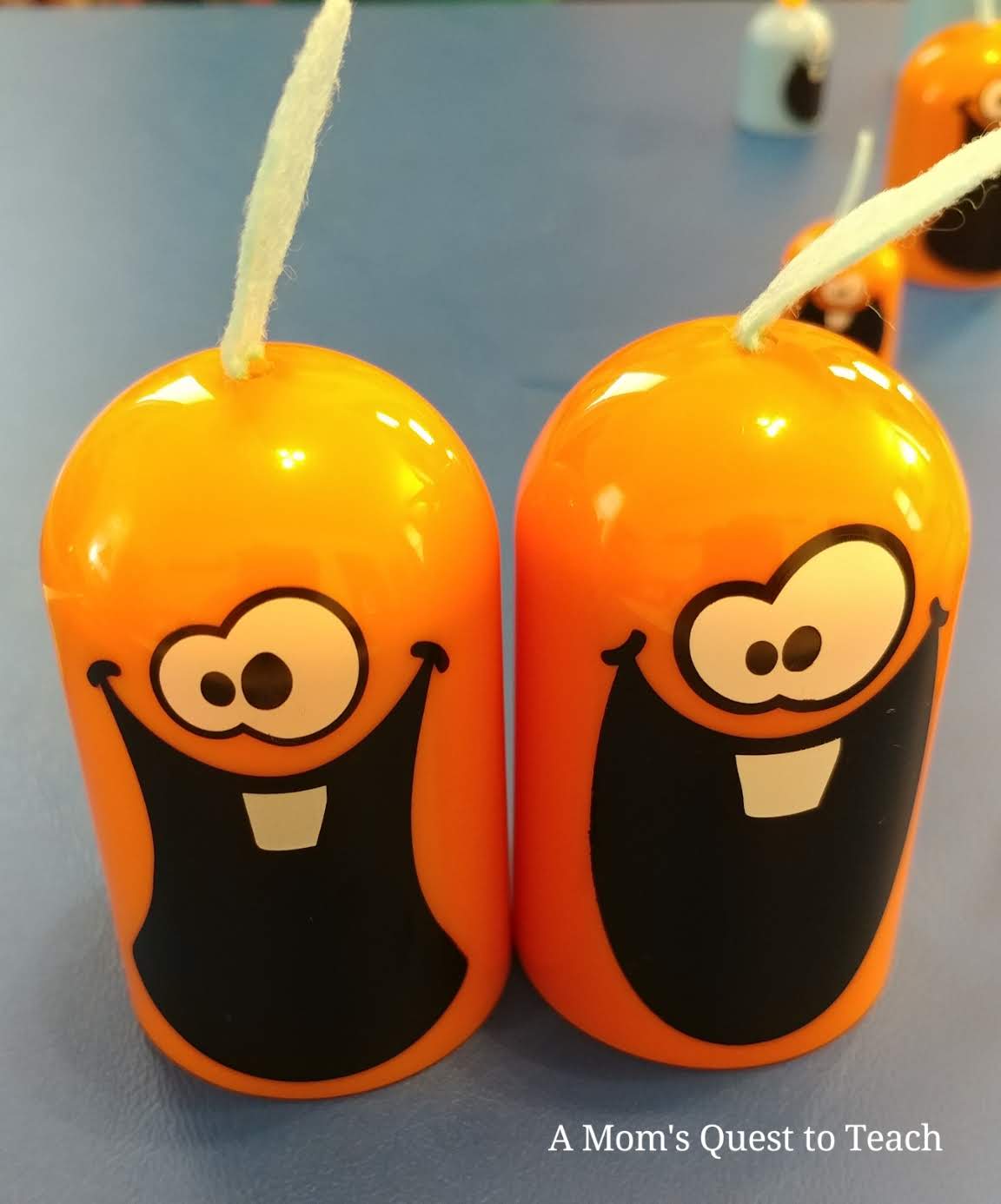
The Gobblers have a felt tip sticking off their head and fun, silly faces. You and your opponent can start playing your first game using typical Tic-Tac-Toe strategies but you will quickly incorporate new strategies. In order to win the game, you will want to be the first to line up three Gobblers in a row but your opponent can stop you in a number of ways.

Gobblet Gobblers two orange large pieces


When you are trying to block your opponent from getting three in a row, you can simply place your Gobbler in a space OR you can put your Gobbler over a smaller one. You can even move your Gobbler that is already on the board to cover up a smaller Gobbler or into a new, empty space. 

Why Is Gobblet Gobblers a Good Game? 

Text: Dice, Decks, and Boards: Gobblet Gobblers; A fun game that requires critical thinking and can be played in 5 minutes. photos of Gobblet Gobblers game box and pieces from game; logo of A Mom's Quest to Teach; Timberdoodle Blog Team logo

When playing Tic-Tac-Toe, children will quickly learn how to beat the game or at least force a tie very early on. When playing Gobblet Gobblers, children will need to think about their moves more carefully as there are many more choices available to help them win. The illustrated game rules provide some very useful tips: 

  • Don't hesitate to gobble up your own pieces. 
  • Before you move a piece, try to remember what is under it. (Once you touch a piece you need to move it and you may be revealing your opponent's winning move.) 
  • Think ahead 
As Gobblet Gobblers is a fast game, it is the perfect one to bring out in the middle of your homeschooling day to help build critical thinking skills with your children. It is also a great game to introduce strategy to your children in gaming.


6 Gobblet Gobblers pieces

How Did We Use Gobblet Gobblers? 


When the game first arrived to review, our younger children and I took turns playing it one afternoon before dinner. Our younger son and I played quite a few games (usually with me winning). It didn't take him long before he started to incorporate some new strategies into his game play. He was more likely to cover up game pieces with his Gobblers than I was when we were playing – leading to some close calls. My husband also played the game with our younger son. He enjoyed drawing out strategies from our son and encouraging him to counter my husband's moves (which paid off when our two boys played). Finally, our two sons played many games after dinner one evening. Both our younger son (aged 7) and our teen had a great time and enjoyed Gobblet Gobblers. Our teen agreed that it is a fun game and does require a lot forethought and planning in order to win a game. He enjoyed it when his few mistakes were quickly exploited by his younger brother, leading to the younger's victory.

I found Gobblet Gobblers the perfect game to take out for a quick break from homeschooling with books and online resources. We could play one or two games and easily pack it away or we could play a tournament and play a great number of rounds.

Gobblet Gobblers game in progress

Gobblet Gobblers game in progress


You can keep the game in the original packaging – putting back the pieces into the green plastic tray or you can put everything into a plastic bag so you can take the game on-the-go. As it requires very little set-up, you could easily bring it with you to a restaurant, grandma's house, or the doctor's office.


Gobblet Gobblers packaging


I think Gobblet Gobblers would be a great addition to your gameschooling shelves! It will help your kindergartener work on memory, visual perception, problem-solving, and help them focus on the task at hand. While it is included in the kindergarten kit, you can very easily play it with children who are older, too. And with each game only taking a few minutes, everyone in your family can enjoy Gobblet Gobblers on game night.

Interested in other Timberdoodle reviews? We've reviewed Tenzi Dice, Bugzzle, and more! 

Timbderdoodle Blog Team logo


Friday, July 31, 2020

Dice, Decks, and Boards: Mermaid Island

Text: Dice, Decks, and Boards: Mermaid Island; cover of board game; logo of A Mom's Quest to Teach

This post contains affiliate links. For more information, please see my Terms of Use and Disclosure Policy page. Thank you.

Our children love playing board games and board games that are cooperative are a big hit with my husband and me because they teach great team-building skills to our children. One game that our children enjoy playing is Mermaid Island from Peaceable Kingdom. It is a great game for any time of the year but especially for summertime!

board game for Mermaid Game

What Is the Goal of the Game?


Children, ages five and up, work together to help the mermaids swim across the waves to reach Mermaid Island before the Sea Witch can get to the island. The game is perfect for 2 to 6 players and is very easy to set up and play.
Text: Dice, Decks, and Boards: Mermaid Island; A Mom's Quest to Teach; mermaid clip art & cover of game

How Do You Play the Game?


All three mermaids begin at the start area while the Sea Witch starts in Seaweed Triangle on the game board. The four wand tokens are placed on the appropriate spaces on the game board. Children take turns spinning to see if they move a mermaid one or two spaces or if the Sea Witch gets to move ahead one space. If the mermaid lands on a space with a wand, all players get the opportunity to use the wand to move the Sea Witch back one space. If the Sea Witch lands on the space, the wand is removed from the game. There is also the chance for a mermaid to skip spaces if she lands at a space leading to a bridge. The mermaid can immediately cross the bridge to skip spaces while the Sea Witch does not get to use the bridges at all.

Children work together to move all three of the mermaid tokens to Mermaid Island. If all three make it, everyone wins! If the Sea Witch gets to the Mermaid Island, the game is over and the mermaids lose.

Mermaid Island gameplay

Beyond the Game

What can you do after you are done playing the Mermaid Island game?


  • Visit the beach 
  • Build a sandcastle 
  • Research manatees which have been compared to mermaids 
  • Go for a swim 
  • Mermaid shows at Weeki Wachee Springs State Park in Florida 
Mermaid Island is great for children who cannot read and beginning readers because there is no reading required. Even with reading being unnecessary, learning still takes place! Your children will practice strategy practices, learn to make decisions together, develop social and emotional skills, and cooperate.

Mermaid Island gameplay

Do Your Children Enjoy Games?


We have shared a number of board games, dice games, and card games at A Mom's Quest to Teach including:

  • Tenzi Game – a fun fast-paced game of rolling dice – there are many ways to play using the Tenzi Card Deck 
  • Koala Capers – an easy card game for young children that reviewing colors and patterns 
  • Cauldron Quest – a cooperative game where everyone works together to beat the wizard 
Text: Dice, Decks, and Boards: Hoot Owl Hoot! Work together to get all the owls home to their nest before the sun rises; A Mom's Quest to Teach; owl clipart; cover of Hoot Owl Hoot