Thursday, May 9, 2019

Book Club: Book Review of The Tinderbox


Disclaimer: I received this book for free from the publisher in return for my honest opinion. All thoughts and opinions are my own. This post contains affiliate links. For more information please see my Terms of Use and Disclosure Policy page. Thank you.

Having read only one other book by Beverly Lewis, I was happy to have the chance to review The Tinderbox from Bethany House. At the center of the story is the Miller family and a secret that could tear apart their lives. "As the long-kept secret emerges into the light of day, can the Millers find a way forward through the turmoil to a place of forgiveness?"

I must admit that I walk into the reading of any book about the Amish with wariness but also respect. I do not completely agree with the choices that the Amish make in regards to Christianity and I think that is part of the reason why, as much as I enjoyed reading the The Tinderbox, I had trouble with some of the events. The secret that Earnest Miller was hiding from his wife, family, and the rest of the Amish in his community brings about discipline from the church leadership. When Earnest seeks forgiveness from his Deacon, I am reminded that we only need seek forgiveness from God. The rules of the Amish and their interpretation of the Bible stir my heart.

The writing of Beverly Lewis is one that puts the reader at ease. I found The Tinderbox to be an easy read – before I knew it I had finished another chapter. I think any young woman would be able to read The Tinderbox and find something to speak to her. Whether one receives encouragement from the strength of Rhoda Miller (Earnest's wife) or the quiet introspection of Sylvia as she plans a future with her love, there are both men and women with whom readers might be able to identify.


The Story 


In The Tinderbox, we are introduced to the Miller Family – Earnest and Rhoda and their children: Sylvia, Tommy, Ernie, Calvin, and Adam. The story focuses upon the lives of both the parents and their daughter along with several other key individuals who help bring the entire plot to life.  Earnest was not born Amish but chose to join the life when he was seeking something. He learned the trade of clock-making and eventually took over the business of Isaac Smucker. Earnest was baptized into the Amish church and married Rhoda. They lived a rewarding life until the tinderbox in his clock-making office was opened and his past was found out by Sylvia. This would set in motion the events of the majority of the book.

There are wonderful scenes depicted throughout the book of the quaint lifestyle of the Amish – from the courting relationship of Sylvia and Titus as they go double dating and get ice cream to the jam-making session of the girls. I think these snapshots into the lives of the Millers and the Amish are what appeal to so many. There is also a look into the life of Rhoda's sister, Hannah, and her suffering due to a miscarriage. And finally, throughout the story, we see a community mourning the death of their leader – Mahlon Zook – who was so integral to the lives of not only the entire community but particularly Earnest.


Final Thoughts 


If you are already a fan of Beverly Lewis, I would recommend picking up The Tinderbox. If you enjoy reading fictional stories about the Amish, this book might also be of interest to you. I found it to be an easy read and one that I finished rather quickly (which for me is a sign that I am enjoying the book). There is also quite a shock at the end of the book – so keep reading to see what happens – and see why there is a sequel arriving in September 2019.


Looking for more book reviews about works from Bethany House?


I have enjoyed reviewing several books from Bethany House including Far Side of the Sea and another book by Beverly Lewis – The Road Home.


Wednesday, May 8, 2019

Learning New Vocabulary: A Review of Vocabulary Virtuoso PSAT-SAT Book 1 (Grades 8-12+)


No matter where your homeschooling journey may take you and your high school students – such as taking standardized tests like the PSAT or the SAT – building vocabulary skills is always important. Our tenth grade high school student has spent most of the year taking a literature-based language arts course. So when the opportunity arose to review Vocabulary Virtuoso PSAT-SAT Book 1 (Grades 8-12+) from The Critical Thinking Co. I knew it would be a great fit for us. It is a 204-page paperback book (it is also available in eBook form) with twenty vocabulary lists and lots of different activities to help students learn the vocabulary words.

What is Vocabulary Virtuoso? 


Vocabulary Virtuoso PSAT-SAT Book 1 (Grades 8-12+) from The Critical Thinking Co. contains nine sets of vocabulary words in twenty lessons. "85% of all the words are from current PSAT or SAT lists" (Introduction). The vocabulary lists include a pronunciation key, definition, other forms of the word, and a sentence using the word in context.  There are a variety of activities included to provide students a chance to use the words in context as well as a story in each lesson. The stories take place in a fictional classroom where students learn the following concepts:

Literary

  • Characterization in literature
  • Idioms
  • Puns
  • Jargon
  • Irony
  • Euphemisms
  • Aphorisms
  • Allusions
  • Theme 

Rhetorical 
  • The art of persuasion in speech and writing
  • Using extended simile to write a poem

Historical 
  • The Renaissance
  • Renaissance Artists 


You can even see some sample pages on The Critical Thinking Co.'s website. This sample includes the table of contents and exercises for Vocabulary List 1. What a great way to see if the book will be a fit for your family!


How We Are Using Vocabulary Virtuoso 


Each vocabulary list and corresponding activities can be spread out nicely over the course of one week. On Monday, I ask our son to create note cards with the vocabulary words and definitions provided or ones from a dictionary if he needs a different one to more clearly understand the word. I also ask him to complete Part A (for the the first four lists, Part A asks the student to choose the best word to complete each sentence).


On Tuesday, I ask our tenth grader to complete parts B and C. For the first four lists, Part B asks students to choose the best word to complete the sentence while Part C is a Story Challenge. Students read through the story and fill in the blanks using the vocabulary words. The Story Challenges also provide useful information. For example, for Vocabulary List 3, the Story Challenge addressed idioms while using words from the list like obfuscate, justify, and malign.


Parts D & E are completed by our high school student on Wednesday. These two parts have been similar to those in the first section. Part D directions are: "The underlined part in each sentence is a synonym, idiom, phrase, or definition for a list word. Unscramble the list word and write the word on the blank."  One of the sentences is: "In a debate, with good reasons, Christopher defended his position that the school should adopt a uniform dress code." (justify being the correct answer) Part E asks students to choose the word, idiom, or phrase from the box that best defines each list word. For List Four Part E includes one word in the choice box, effervescent, which was in Vocabulary List 1 to match with ebullient.


Finally, Part F is completed. Throughout the book Part F asks students to "Complete each sentence to show that you understand the meaning of the underlined word." For example, here is one of our son's sentences: "Because he had been frugal with money he earned and received as a gift, Dylan bought a decent car at 18."


At the end of each week, I created a short vocabulary quiz (10 to 15 questions in length) using some of the questions from the book in addition to some I created myself. We are counting his work in Vocabulary Virtuoso PSAT-SAT Book 1 and the quizzes for his American Lit course.

At the conclusion of each section, there are review lists (for five review lists in total). There is a crossword puzzle, sentence completion, and matching questions. When reviewing Lists 5-8, our son will have to match vocabulary words with fictional book titles – what a neat idea to help build vocab skills!


What Does Our Teen Think? 


When talking with our teen while he was completing the review activities for lists 1-4, I asked him what he liked about Vocabulary Virtuoso. He said he really liked the format of the book. It is clean and concise and easy to look at while working on the activities. The way the information is presented suits the way he learns. For example, he explained he does not like the way most textbooks are organized with main text, boxed secondary information, and information set into separate parts. He prefers something that is straightforward in layout.


He appreciates the variety of activities so that while he is working on each list he does not feel bored. His least favorite activity is the last one where he needs to complete the sentences. He said sometimes it is harder to figure out an ending for the sentence than other times. (I think this means his brain is working to make sure that he demonstrates he understands the vocabulary word!)


In the Future 


We may take a break from working with Vocabulary Virtuoso PSAT-SAT Book 1 during the summer, but I see us completing the work in our next homeschool year in a similar fashion – one list per week. I even hope to ask our son to include the vocabulary words in his other course work – when writing essays, letters, notes, etc. This is a perfect way to ensure he is absorbing and utilizing all these excellent words.

And since our teen seems to enjoy working with Vocabulary Virtuoso, I see this being a good fit in the upcoming homeschooling year and in the future with Book 2.

And while we are unsure as to whether not our son plans on taking the SAT (his future plans after completing high school are still undecided), I am definitely glad we are using Vocabulary Virtuoso PSAT-SAT Book 1 (Grades 8-12+) as building a good vocabulary is important in a variety of careers, professions, and educational paths.


Notes and Observations


Our teen sometimes completes all the work on one day – he prefers to complete work that doesn't need a computer done at one time – so there is no reason why each set of vocabulary would need to take an entire week. I think it all depends on what you and your children are doing in your homeschool. This makes Vocabulary Virtuous a great addition because it can be used in a variety of ways.

I like how each list can build upon the previous lists and that even within the different activities there are words that may challenge a student.

There are answer keys at the back of the book which you may choose to remove from the book to ensure your child completes all the work on their own. There is also a sample activity from Critical Thinking Detective TM – Vocabulary Book 1. (This looks like another great resource!)


If you are interested in learning more about The Critical Thinking Co., please be sure to check out the following sites:


And if you are interested in purchasing any of their products...use the code TOSCREW19 to receive Free Shipping and 15% off any size order! This code (TOSCREW19) expires 12/31/2019.


And be sure to check out all the other reviews – The Critical Thinking Co. publishes many great products! From a book of 20 Elementary Math Games to works that will help your children build writing skills. The Critical Thinking Co. might have the perfect resource for your homeschool.


Tuesday, May 7, 2019

Virtual Refrigerator: Weekly Art Link-Up

Welcome to the Virtual Refrigerator art link-up! 


We would like to extend an invitation to you and your children to share their artwork created while homeschooling. Each month we will host a link-up for you to share your posts about you or your children's art creation.

After you link up, please visit the other blogs and admire what they have shared from their fridges.


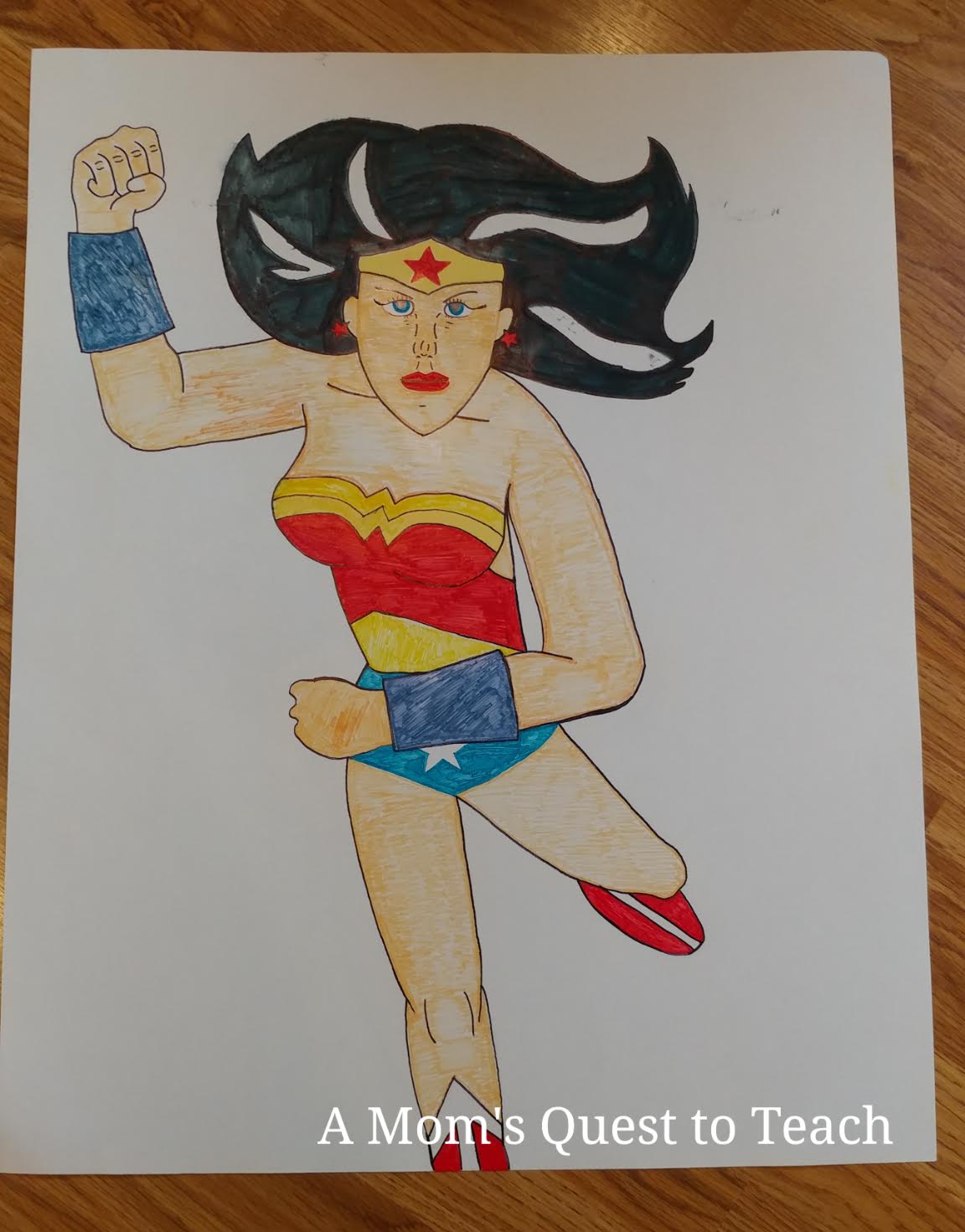
Our Teen's Art 


I asked our teenage son to prepare a poster for our daughter's Wonder Woman Birthday Party. He created this great poster using a comic book style picture as inspiration.


I have shared other work from our teen in several posts including one on Image Editing and one on finding nature all around us.


Co-hosts 


Jennifer at A "Peace" of Mind
Kym at Homeschool Coffee Break
Our Unschooling Journey Through Life
Kristen at A Mom's Quest to Teach


Please link up and grab our blog button, too!


Please keep all art work shared family-friendly. We reserve the right to remove any blog posts that are not family-friendly or fit the theme.
You are invited to the Inlinkz link party!
Click here to enter


Monday, May 6, 2019

Crafts: Lions


This post contains affiliate links. For more information please see my Terms of Use and Disclosure Policy page. Thank you.


Learning about animals can be so much fun for young children. One of the ways for them to remember what they have learned is to create a craft. So, in addition to reading books about lions, watching videos of them or seeing them in person, your children can make their own lion.

Let's Learn about Lions 


  • Male lions can grow to be 9 feet long from nose to tail and can weigh over 550 pounds 
  • Male lions have a mane
  • Female lions are called lionesses
  • Most lions live on the savannas of Africa (a small number live in Asia) 
  • Lions live in groups called prides 

Materials 


Steps 


1. Gather all your materials. 


2. Cut out the pieces you need – the mane, eyes, ears, nose, and mouth. 

3. Glue the mane onto the black construction paper. 


4. Color the face of your lion (the coffee filter). 


5. Glue on the eyes, nose, and mouth. 


6. Glue the face onto the black construction paper and then glue on the ears. 


Fun Books to Read 


Looking for more animal-themed crafts? 


Our children have made several crafts while studying animals. We have put together the life cycle of a butterfly, designed giraffes, and made dog paper bag puppets. 


Friday, May 3, 2019

K is for Khnum (Blogging Through the Alphabet)


This post contains affiliate links. For more information please see my Terms of Use and Disclosure Policy page. Thank you.

Khnum was a ram-headed creator deity of Egyptian mythology. He may be considered one of the most important ram gods due to his ability to control the inundation of the Nile. (The inundation of the Nile River is when it would overflow its river banks and thus provide another season of growing due to the introduction of new fertile soil.) Along with his wife, Satet, and their daughter Anuket (goddess of the First Cataract), Khnum was worshiped as guardian of the cataract area and protected royal expeditions on their way to Nubia. Khnum is usually depicted as a man with a ram’s head but sometimes he is shown in entirely ram form.

The ram is a symbol of fertility and the ancient Egyptian word for ram was ‘ba.’ 'Ba' was also the word for ‘personality,’ the idea of what makes a human unique. Khnum was considered to be the ba of Re (the sun god). Sometimes the sun god was shown as a ram-headed being when in the netherworld.

In addition to being the creator god, Khnum was the patron deity of potters and was associated with the annual inundation and the Nile cataracts. The cataracts are white water rapids located between Aswan and Khartoum. The cataracts added in making invasion from the south difficult but also hurt Egypt by making trade difficult along that part of the Nile River.


What Does Khnum Look Like?


We already stated that Khnum is depicted as a ram-headed human or just a ram. While in his ram-headed human form, he may have the horns of the first species of sheep domesticated in Egypt (Ovis longipes) or the short curved horns of the Ovis platyra ram. On some occasions, he would wear the Atef Crown (White Crown of Upper Egypt). He was usually shown with his potter's wheel molding a child.

Centers of Worship


Khnum’s cult center was at Elephantine – an island at the first cataract at the southern border of Egypt. At Elephantine, Khnum was the head of a triad of his wife and daughter. Mummified rams have been discovered at the site but little of the temples or buildings remain.

He also had a cult center at Esna where the Festival of the Potter’s Wheel was celebrated yearly. At Esna, Khnum was associated with the lion goddess Menhyt and the chief crocodile goddess Neith.


Nile Crocodile image from WPClipart.com


Creation Myth 


There are a variety of creation myths that are a part of Egyptian mythology. A variety of gods and goddesses play a role in the myths (usually dependent upon the location within the Egyptian kingdom). In this one, Khnum created the universe by modelling the other gods and goddesses as well as humankind, animals, fish, plants, and more on his potter’s wheel. Khnum focused upon the creation of the anatomy of humans – the blood flow, the respiratory and digestive systems, and reproductive systems. He continued to watch over humans by keeping watch over conception and labor. 

Royal Family Creation 


Khnum was integral in the creation mythology of the royal family. In more than one location he is shown sitting at his potter’s wheel molding the royal son. He fashions the ruler and his ‘ka’ on the potter’s wheel. The ka is often translated as spirit or vital force. 

The royal child – Amenhotep III – was formed on the potter wheel of Khnum. This image is depicted in rooms behind the sacred boat shrine at the Temple of Luxor. In other birth houses (like at the Temple of Dendera), Khnum is shown creating the royal child on this potter’s wheel while Heket (the frog goddess) presents the ankh. 

Ankh image by Wolfgang Barth from Pixabay 2019

Khnum is also mentioned in the birth story of Hatshepsut – female pharaoh of Ancient Egypt during the 18th Dynasty of the New Kingdom. Per the account depicted at her temple at Deir el-Bahari, Khnum is told by Amun-Re to create his daughter calling her “Khemenet-Amun-Hatshepsut” and that she will exercise her kingship over the whole land. Khnum forms Hatshepsut and her ka on the potter’s wheel and Heket, with the sign of life (the ankh) kneels next to them. Khnum is one of the five deities who assist at the birth of children. 

Curious to learn more about Ancient Egypt? 


Thanks to a love of Ancient Egypt encouraged by both my Grandpop and my Mom, I have numerous books on ancient Egypt, its religion, and daily life. From classics written by E. A. Wallis Budge to more modern works written by Dr. Zahi Hawass, there is an abundance of information available for the budding Egyptologist.  I have also written a number of posts about some of the goddesses and pharaohs of Egypt.


Do You Want to Link Up This Week? 


You are invited to the Inlinkz link party!
Click here to enter